
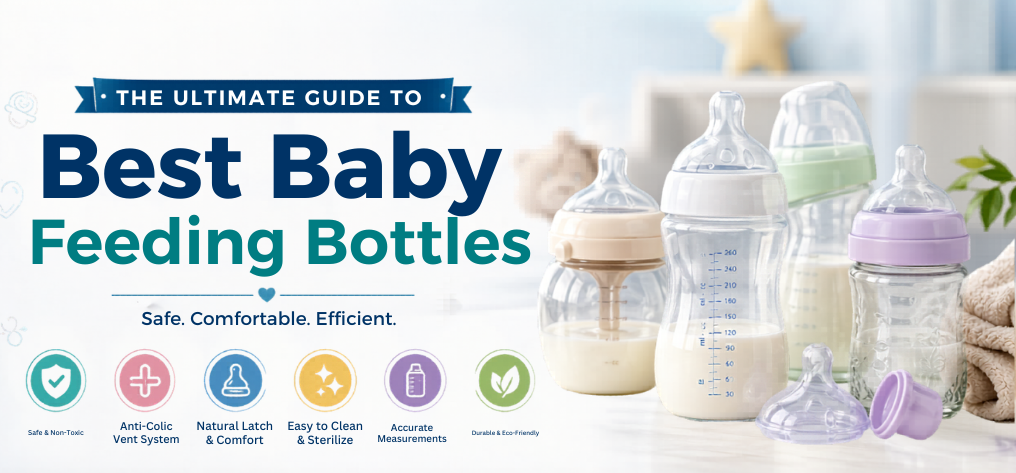
Selecting the best baby feeding bottles is essential for ensuring your baby’s nutrition, comfort, and healthy development. A well-designed feeding bottle supports proper latch, reduces colic, preserves nutrients, and ensures hygienic feeding. We present a comprehensive, expertly structured guide that covers everything from bottle types and materials to nipple design, safety standards, and maintenance practices.
Why Choosing the Best Baby Feeding Bottles Matters
A high-quality feeding bottle provides:
- Safe and toxin-free feeding experience
- Reduced air intake, minimizing colic and gas
- Natural feeding flow that mimics breastfeeding
- Ease of cleaning and sterilization
- Durability for daily use
Poor-quality bottles can lead to feeding discomfort, digestive issues, and hygiene concerns. The right feeding bottle ensures a smooth and nurturing feeding routine.
Types of Baby Feeding Bottles
Standard Baby Bottles: Simple and Reliable
Standard bottles are:
- Straightforward in design
- Easy to clean and maintain
- Ideal for everyday feeding
They offer basic functionality with dependable performance.
Anti-Colic Bottles: Designed for Comfort
Anti-colic bottles feature:
- Advanced venting systems
- Reduced air bubbles during feeding
- Prevention of gas, reflux, and fussiness
These are perfect for babies prone to digestive discomfort.
Wide-Neck Bottles: Breastfeeding Compatibility
Wide-neck bottles provide:
- Natural latch support
- Easy filling and cleaning
- Compatibility with breastfeeding routines
They are ideal for combination feeding.
Angled Bottles: Ergonomic Feeding
Angled bottles are designed to:
- Maintain consistent milk flow
- Reduce air intake
- Provide comfortable feeding angles
These are especially useful for new parents.
Glass Bottles: Premium and Eco-Friendly
Glass feeding bottles offer:
- Chemical-free composition
- High durability against heat
- Easy sterilization
They are a preferred choice for eco-conscious families.
Key Features of the Best Baby Feeding Bottles
1. High-Quality Nipple Design
The nipple plays a crucial role in feeding:
- Soft silicone nipples for comfort
- Multiple flow rates for different ages
- Breast-like shape for natural latch
2. Anti-Colic Venting System
Premium bottles include:
- Internal vent systems
- Air-free feeding design
- Reduced risk of colic and gas
3. Safe and Non-Toxic Materials
Look for:
- BPA-free plastic or glass
- Food-grade silicone
- Non-toxic coatings
Safety is essential for long-term health.
4. Easy Cleaning and Sterilization
Top bottles feature:
- Wide openings
- Minimal parts for easy assembly
- Compatibility with sterilizers and dishwashers
5. Leak-Proof and Travel-Friendly Design
Ensure:
- Tight sealing caps
- Spill-proof construction
- Compact portability
6. Measurement Markings for Accuracy
Clear measurement indicators allow:
- Precise feeding portions
- Easy tracking of intake
- Consistent feeding routines
Best Baby Feeding Bottles for Different Needs
Best for Newborns
- Slow-flow nipples
- Anti-colic design
- Soft, flexible materials
Best for Breastfed Babies
- Wide-neck bottles
- Breast-like nipple shape
- Smooth transition between feeding methods
Best for Colic-Prone Babies
- Advanced venting systems
- Air-free feeding technology
- Gentle milk flow
Best for Travel
- Lightweight and compact bottles
- Leak-proof lids
- Easy assembly and cleaning
Materials Used in Baby Feeding Bottles
Plastic Bottles
- Lightweight and durable
- BPA-free safety
- Affordable and widely available
Glass Bottles
- Chemical-free and eco-friendly
- Resistant to heat and stains
- Long-lasting durability
Silicone Bottles
- Flexible and soft
- Lightweight yet durable
- Safe for babies
Nipple Flow Guide by Age
| Age Group | Flow Type | Description |
|---|---|---|
| 0–3 months | Slow flow | Gentle and controlled feeding |
| 3–6 months | Medium flow | Increased milk flow |
| 6–12 months | Fast flow | Suitable for growing babies |
| 12+ months | Variable flow | Adjustable feeding speed |
How to Choose the Best Baby Feeding Bottle
When selecting a feeding bottle, consider:
- Baby’s age and feeding style
- Material preference (plastic, glass, silicone)
- Ease of cleaning and sterilization
- Anti-colic features
- Compatibility with breastfeeding
Choosing the right bottle ensures efficient and stress-free feeding.
How to Use Baby Feeding Bottles Safely
Step-by-Step Feeding Guide
- Wash hands thoroughly before preparation
- Sterilize the bottle and nipple
- Prepare milk at the correct temperature
- Check nipple flow before feeding
- Hold the bottle at a proper angle
- Burp the baby after feeding
Proper usage ensures safe and comfortable feeding.
Cleaning and Sterilization Tips
- Clean immediately after use
- Use bottle brushes for deep cleaning
- Sterilize regularly using steam or boiling
- Allow bottles to air dry completely
Maintaining hygiene prevents bacterial growth and contamination.
Common Mistakes to Avoid
- Using incorrect nipple flow
- Not sterilizing regularly
- Over-tightening bottle caps
- Ignoring signs of wear and tear
- Mixing incompatible bottle parts
Avoiding these mistakes ensures optimal feeding safety.
Advantages of Premium Baby Feeding Bottles
- Enhanced feeding comfort
- Reduced colic and gas issues
- Long-lasting durability
- Better hygiene and safety standards
- Improved feeding efficiency
A premium bottle enhances both baby’s health and parental convenience.
Baby Feeding Bottle Comparison Table
| Feature | Standard Bottle | Anti-Colic Bottle | Glass Bottle | Silicone Bottle |
|---|---|---|---|---|
| Weight | Light | Moderate | Heavy | Light |
| Safety | Good | Excellent | Excellent | Excellent |
| Durability | High | High | Very High | High |
| Cleaning | Easy | Moderate | Easy | Easy |
| Best For | Daily use | Colic prevention | Eco-friendly use | Flexible feeding |
Expert Tips for Better Feeding Experience
- Always use age-appropriate nipples
- Replace nipples regularly
- Keep bottles clean and sterilized
- Monitor baby’s feeding comfort
- Store milk safely
These practices ensure consistent feeding quality.
Conclusion
We emphasize that choosing the best baby feeding bottles is essential for ensuring safe, comfortable, and efficient feeding. A high-quality bottle integrates advanced design, safe materials, and ergonomic features, providing the ideal feeding solution for every stage of growth. By selecting the right bottle, parents can ensure a healthy, stress-free feeding journey.
FAQs
1. What is the best bottle for newborns?
A slow-flow, anti-colic bottle is ideal.
2. Are glass bottles safe?
Yes, they are durable and chemical-free.
3. How often should bottles be sterilized?
Daily for newborns.
4. What is BPA-free?
A material free from harmful chemicals.
5. Can I mix bottle brands?
Not recommended.
6. How do I prevent colic?
Use anti-colic bottles with vent systems.
7. How long can milk stay in a bottle?
Up to 2 hours at room temperature.
8. Can I microwave bottles?
Only if labeled microwave-safe.
9. When should I change nipple flow?
As the baby grows.
10. Are silicone bottles better?
They are flexible and safe.
11. Can I reuse bottles for another baby?
Yes, if in good condition.
12. What size bottle should I buy?
Start small, then upgrade.
13. Are anti-colic bottles effective?
Yes, they reduce air intake.
14. How do I clean bottle nipples?
Use a soft brush and warm water.
15. Can babies hold bottles themselves?
Usually after 6 months.
16. Are expensive bottles worth it?
Yes, for better design and safety.
17. How do I store bottles?
In a clean, dry place.
18. Can I use bottles for water?
Yes, after 6 months.
19. How long do bottles last?
Several months with proper care.
20. What is vented bottle design?
It reduces air intake.
21. Are plastic bottles safe?
Yes, if BPA-free.
22. Can I travel with bottles?
Yes, use leak-proof designs.
23. What causes nipple collapse?
Improper airflow.
24. Should I warm milk?
Yes, to body temperature.
25. How many bottles do I need?
Typically 4–6 for daily use.