
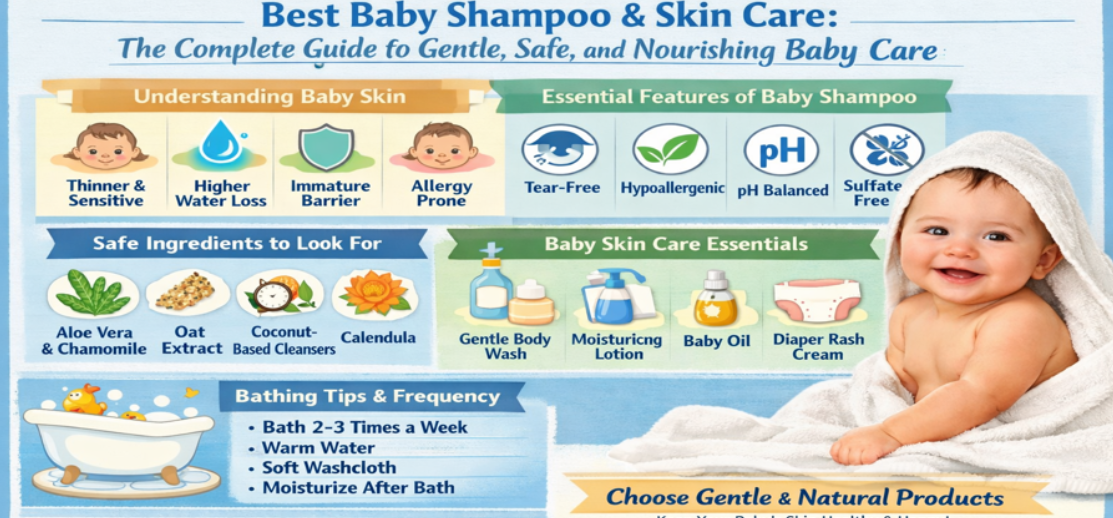
Caring for a baby’s delicate skin and hair requires thoughtful choices and high-quality products designed specifically for infants. Baby skin is significantly thinner, more sensitive, and more vulnerable to irritation than adult skin. Because of this, selecting the best baby shampoo and skin care products becomes one of the most important decisions parents make during the early months and years of a child’s life.
In this comprehensive guide, we explore everything needed to choose safe, gentle, and effective baby shampoos and skin care solutions, including ingredients to look for, ingredients to avoid, proper bathing routines, moisturizing strategies, and product comparisons. This guide serves as a complete resource for parents seeking the safest and most nourishing care for their baby's skin and hair.
Understanding Baby Skin: Why Specialized Care Matters
Baby skin is uniquely sensitive and requires specialized care to maintain its natural balance.
Key Characteristics of Baby Skin
-
Thinner epidermis than adult skin
-
Higher water loss, leading to faster dryness
-
Immature protective barrier
-
Greater sensitivity to chemicals and fragrances
-
Higher risk of irritation and allergic reactions
Because of these characteristics, using adult products on babies can lead to dryness, rashes, and irritation. The best baby shampoo and skin care routines rely on products formulated with gentle, hypoallergenic, and dermatologist-tested ingredients.
Essential Features of the Best Baby Shampoo
Choosing the right shampoo for your baby involves more than just selecting a popular brand. The best options meet several important criteria.
1. Tear-Free Formula
Babies dislike shampoo in their eyes. High-quality baby shampoos include tear-free formulations that reduce eye irritation while still cleansing hair effectively.
2. Hypoallergenic Ingredients
Babies may react strongly to harsh ingredients. Hypoallergenic shampoos are designed to minimize the risk of allergic reactions.
3. pH-Balanced Formulation
Healthy baby skin has a delicate pH balance. The best shampoos maintain a skin-friendly pH level that supports the scalp’s natural barrier.
4. Sulfate-Free Cleansing
Harsh detergents strip natural oils. Gentle shampoos rely on mild plant-based cleansers instead of strong sulfates.
5. Fragrance-Free or Na turally Scented
Artificial fragrances can irritate baby skin. The safest shampoos use minimal or naturally derived scents.
Key Ingredients to Look for in Baby Shampoo
Parents should always read ingredient labels carefully. The best baby shampoos typically contain nurturing ingredients.
Gentle and Beneficial Ingredients
-
Chamomile Extract – soothing and anti-inflammatory
-
Aloe Vera – hydrates and calms sensitive skin
-
Calendula – reduces redness and irritation
-
Oat Extract – protects against dryness
-
Coconut-derived cleansers – mild and effective
These ingredients provide cleansing, hydration, and protection without disrupting the baby's delicate scalp.
Ingredients to Avoid in Baby Shampoo and Skin Care
Many mainstream products contain chemicals that are unsuitable for babies.
Avoid These Ingredients
-
Parabens
-
Phthalates
-
Synthetic fragrances
-
Sulfates (SLS/SLES)
-
Alcohol-based preservatives
-
Artificial dyes
These substances can irritate sensitive skin and disrupt the natural moisture barrier.
Best Baby Skin Care Products for Healthy Skin
Baby skin care extends beyond shampoo. A complete routine includes moisturizing, cleansing, and protective products.
1. Baby Body Wash
A gentle body wash should:
-
Clean without drying
-
Maintain natural oils
-
Contain mild plant-based ingredients
2. Baby Lotion
A nourishing lotion prevents dryness and maintains softness.
Look for:
-
Shea butter
-
Glycerin
-
Natural oils
-
Ceramide-rich formulas
3. Baby Oil
Baby oils lock in moisture after baths. Lightweight oils help maintain skin hydration and softness.
4. Diaper Rash Cream
This protective cream shields delicate skin from moisture and irritation.
Common soothing ingredients include:
-
Zinc oxide
-
Calendula
-
Shea butter
How to Create the Perfect Baby Bath Routine
Proper bathing techniques are just as important as product selection.
Step-by-Step Baby Bath Routine
-
Prepare warm water
-
Use a soft washcloth
-
Apply gentle baby shampoo
-
Massage scalp softly
-
Rinse thoroughly
-
Pat skin dry gently
-
Apply moisturizer immediately
Bathing should last 5–10 minutes to prevent skin dryness.
How Often Should Babies Be Bathed?
Many parents assume babies require daily baths. In reality, two to three baths per week is sufficient for most infants.
Bathing Frequency Guidelines
| Age | Bath Frequency | Notes |
|---|---|---|
| Newborn | 2–3 times weekly | Sponge baths initially |
| 3–6 months | 3 times weekly | Skin becomes slightly stronger |
| 6–12 months | 3–4 times weekly | Babies become more active |
Daily bathing can sometimes dry out sensitive skin, especially in colder climates.
Best Moisturizing Practices for Baby Skin
Hydration is essential to maintain soft, healthy skin.
Effective Moisturizing Tips
-
Apply lotion within three minutes after bathing
-
Use fragrance-free creams
-
Massage gently to improve absorption
-
Choose thicker creams during winter
-
Use lighter lotions in warm climates
Moisturizing prevents eczema flare-ups, dryness, and irritation.
Understanding Common Baby Skin Conditions
Many babies experience temporary skin issues.
1. Cradle Cap
Cradle cap appears as yellowish flaky patches on the scalp.
Treatment:
-
Use gentle baby shampoo
-
Massage scalp softly
-
Brush flakes away carefully
2. Baby Eczema
Eczema causes dry, itchy patches.
Prevention strategies:
-
Frequent moisturizing
-
Avoid harsh soaps
-
Use hypoallergenic products
3. Diaper Rash
Moisture and friction cause diaper rash.
Solutions:
-
Change diapers frequently
-
Apply protective creams
-
Allow diaper-free time
Natural Baby Skin Care: Safe and Gentle Alternatives
Natural ingredients can be excellent for baby care when used correctly.
Popular Natural Ingredients
-
Coconut oil
-
Almond oil
-
Shea butter
-
Oatmeal extracts
-
Chamomile
These ingredients provide nourishing hydration without harsh chemicals.
Organic Baby Shampoo and Skin Care Benefits
Organic baby products are becoming increasingly popular for good reason.
Advantages of Organic Baby Care
-
Reduced exposure to pesticides
-
Plant-based ingredients
-
Minimal synthetic chemicals
-
Eco-friendly production
-
Gentle formulations
Organic products are particularly beneficial for babies with extremely sensitive or allergy-prone skin.
Seasonal Baby Skin Care Tips
Different seasons require adjustments to baby care routines.
Winter Baby Skin Care
Cold air can dry out baby skin.
Helpful strategies:
-
Use thicker moisturizers
-
Limit bath duration
-
Use humidifiers indoors
Summer Baby Skin Care
Heat and sweat increase irritation risks.
Recommended practices:
-
Use lightweight lotions
-
Bathe after sweating
-
Dress babies in breathable fabrics
Safe Hair Care for Babies
Baby hair is fine and fragile. Proper care ensures healthy growth.
Baby Hair Care Tips
-
Wash hair 2–3 times weekly
-
Use very small amounts of shampoo
-
Avoid tight hairstyles
-
Use soft baby brushes
-
Keep scalp moisturized
This routine helps maintain a clean and healthy scalp without dryness.
Choosing Dermatologist-Tested Baby Products
Dermatologist testing ensures safety for sensitive skin.
Look for labels such as:
-
Dermatologist tested
-
Pediatrician recommended
-
Clinically proven gentle
-
Hypoallergenic
These certifications indicate that the products have undergone safety evaluations suitable for infants.
Complete Baby Skin Care Routine
A simple routine ensures consistent care.
Morning Routine
-
Clean face with warm water
-
Apply lightweight moisturizer
-
Protect diaper area
Evening Routine
-
Gentle bath
-
Shampoo scalp
-
Moisturize entire body
-
Apply diaper cream if necessary
Consistency keeps skin soft, balanced, and protected.
Signs a Baby Product Is Not Suitable
Parents should monitor for negative reactions.
Warning Signs
-
Redness
-
Dry patches
-
Itching
-
Rash
-
Flaking
If symptoms appear, discontinue use and switch to gentler formulations.
Baby Skin Care Checklist
Essential Baby Care Products
-
Baby shampoo
-
Gentle body wash
-
Moisturizing lotion
-
Baby oil
-
Diaper rash cream
-
Soft washcloth
-
Baby brush
Keeping these items available ensures consistent, high-quality care.
Table: Quick Comparison of Baby Skin Care Product Types
| Product Type | Primary Benefit | Frequency of Use |
|---|---|---|
| Baby Shampoo | Cleans scalp and hair | 2–3 times weekly |
| Baby Body Wash | Removes dirt and sweat | During baths |
| Baby Lotion | Maintains hydration | Daily |
| Baby Oil | Locks in moisture | After bathing |
| Diaper Cream | Prevents irritation | At every diaper change |
FAQs
1. How often should I wash my baby’s hair?
2–3 times per week is usually sufficient.
2. Is baby shampoo safe for newborns?
Yes, when it is formulated specifically for newborn use.
3. Can adults use baby shampoo?
Yes, because it is mild and gentle.
4. What causes cradle cap?
Overactive oil glands on the scalp.
5. Should babies use conditioner?
Usually unnecessary for infants.
6. Is daily bathing harmful?
It can cause dryness if done too frequently.
7. Are natural oils safe for babies?
Yes, when used in small amounts and properly tested.
8. Can baby lotion prevent eczema?
Regular moisturizing helps reduce flare-ups.
9. When should babies start using shampoo?
From birth with gentle formulas.
10. Should I avoid fragrance completely?
Fragrance-free products are safest.
11. What temperature should bath water be?
Around 37°C (98.6°F).
12. Can baby skin care products expire?
Yes, always check expiration dates.
13. How long should bath time last?
5–10 minutes.
14. Is coconut oil good for baby skin?
Yes, it provides natural hydration.
15. Should baby shampoo foam a lot?
Not necessarily; mild cleansers produce less foam.
16. What should I do if shampoo enters baby’s eyes?
Rinse gently with clean water.
17. Are organic baby products better?
They reduce chemical exposure.
18. Can babies develop allergies to skincare products?
Yes, always test new products.
19. What is the best moisturizer for babies?
Fragrance-free creams with natural oils.
20. Is baby powder necessary?
Modern pediatric guidance often recommends avoiding it.
21. Can babies get dry scalp?
Yes, especially in colder climates.
22. Should babies use sunscreen?
After 6 months, mineral sunscreens are recommended.
23. How do I choose hypoallergenic products?
Check labels and avoid harsh chemicals.
24. Can baby skin care products be used daily?
Yes, if they are gentle and hydrating.
25. What is the most important baby skin care rule?
Use gentle, minimal, and nourishing products.