
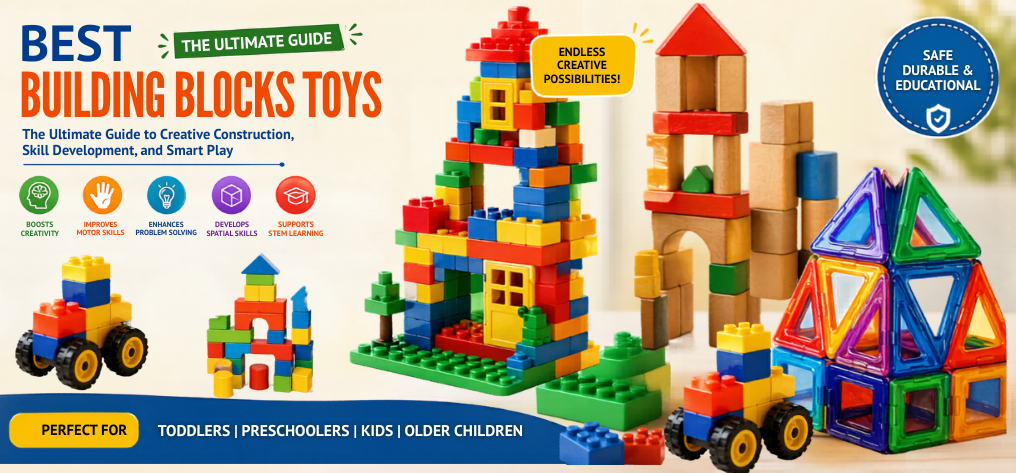
Building block toys are among the most powerful educational tools available for children. We focus on delivering a deeply detailed, expertly structured guide to the best building blocks toys, designed to enhance creativity, cognitive development, motor skills, and problem-solving abilities. From toddlers to older kids, the right building blocks set lays the foundation for lifelong learning, engineering thinking, and imaginative exploration.
Why Building Blocks Toys Are Essential for Child Development
Building blocks are not just simple stacking tools—they are multi-dimensional learning systems that stimulate brain activity and encourage hands-on exploration. Children who regularly engage with building blocks develop:
- Spatial intelligence and visual reasoning
- Fine motor skills and hand-eye coordination
- Creativity and design thinking
- Logical problem-solving abilities
- Patience, focus, and persistence
We emphasize selecting block sets that are purpose-driven, safe, and adaptable to a child’s developmental stage.
Key Features of the Best Building Blocks Toys
1. High-Quality Materials and Safety Standards
The best building blocks are crafted using:
- Non-toxic, BPA-free materials
- Smooth edges for safe handling
- Durable construction for long-term use
2. Age-Appropriate Design
Different age groups require different block types:
- Toddlers: Large, soft blocks
- Preschoolers: Interlocking bricks
- Older kids: Advanced construction sets
3. Compatibility and Expandability
Top-tier block systems allow:
- Expansion with additional sets
- Compatibility with existing collections
- Flexible design possibilities
4. Educational Value
High-quality building blocks support:
- STEM learning concepts
- Engineering fundamentals
- Mathematical thinking
Top Types of Building Blocks Toys
1. Wooden Building Blocks
Wooden blocks are classic, durable, and eco-friendly.
Features:
- Natural textures
- Long-lasting durability
- Minimalistic design
Benefits:
- Enhances sensory development
- Promotes open-ended play
- Encourages creative thinking
2. Plastic Interlocking Blocks
These are among the most popular building toys globally.
Characteristics:
- Bright colors
- Easy-to-connect pieces
- Wide variety of themes
Advantages:
- Encourages structured building
- Improves fine motor skills
- Supports imaginative play
3. Magnetic Building Blocks
Magnetic blocks provide a unique construction experience.
Features:
- Magnetic edges
- Transparent designs
- Easy assembly
Benefits:
- Develops spatial awareness
- Encourages creative experimentation
- Enhances problem-solving skills
4. Foam and Soft Blocks
Ideal for younger children and toddlers.
Features:
- Lightweight and soft materials
- Safe for early play
- Easy to handle
Advantages:
- Supports motor skill development
- Reduces injury risks
- Encourages early learning
5. STEM Construction Kits
Advanced building sets designed for older children.
Examples:
- Robotics kits
- Mechanical construction sets
- Engineering models
Benefits:
- Builds technical skills
- Encourages innovation
- Develops analytical thinking
Best Building Blocks Toys by Age Group
Building Blocks for Toddlers (1–3 Years)
Recommended Options:
- Large stacking blocks
- Soft foam blocks
- Basic shape builders
Focus Areas:
- Sensory exploration
- Hand-eye coordination
- Basic motor skills
Building Blocks for Preschoolers (3–5 Years)
Top Choices:
- Interlocking plastic bricks
- Magnetic tiles
- Beginner construction sets
Development Goals:
- Creativity
- Problem-solving
- Spatial awareness
Building Blocks for Kids (5–8 Years)
Best Picks:
- Advanced building kits
- Themed construction sets
- STEM-based toys
Key Skills:
- Logical reasoning
- Engineering basics
- Design thinking
Building Blocks for Older Kids (8+ Years)
Recommended Sets:
- Robotics kits
- Complex construction systems
- Architecture models
Focus:
- Advanced problem-solving
- Technical skills
- Innovation
Wooden vs Plastic Building Blocks: A Detailed Comparison
| Feature | Wooden Blocks | Plastic Blocks |
|---|---|---|
| Durability | High | Moderate to High |
| Safety | Excellent (if certified) | Depends on quality |
| Environmental Impact | Eco-friendly | Less sustainable |
| Design Variety | Limited | Extensive |
| Cost | Higher | More affordable |
Conclusion: Wooden blocks offer durability and sustainability, while plastic blocks provide versatility and design flexibility.
How to Choose the Best Building Blocks Toys
We recommend a precise and effective selection strategy:
- Select toys based on age and skill level
- Choose multi-functional sets for extended play
- Prefer open-ended designs for creativity
- Ensure compatibility with other sets
- Focus on quality over quantity
Benefits of Building Blocks Toys
- Enhances creativity and imagination
- Improves fine motor skills
- Boosts cognitive development
- Encourages independent learning
- Strengthens problem-solving abilities
Common Mistakes to Avoid
- Choosing blocks that are too small for toddlers
- Ignoring material safety standards
- Buying overly complex sets for beginners
- Limiting children to structured play only
- Overloading with too many sets
Expert Tips for Maximizing Learning Through Building Blocks
- Encourage free-form construction
- Combine blocks with storytelling
- Introduce challenges and building tasks
- Rotate sets to maintain engagement
- Participate in collaborative building sessions
Advanced Trends in Building Blocks Toys
The building blocks category continues to evolve with innovations such as:
- AI-integrated construction kits
- Augmented reality building experiences
- Eco-friendly biodegradable materials
- Smart interactive blocks
These innovations redefine how children engage with construction toys.
FAQs
1. What are building blocks toys?
Toys designed for stacking, connecting, and constructing structures.
2. At what age can kids start using building blocks?
From 6 months with soft blocks.
3. Are building blocks educational?
Yes, they promote cognitive and motor development.
4. What are the safest building blocks?
Blocks made from non-toxic materials with no sharp edges.
5. Are wooden blocks better than plastic?
They are more durable and eco-friendly.
6. What blocks are best for toddlers?
Large, soft, and easy-to-grip blocks.
7. Do building blocks improve IQ?
They enhance problem-solving and logical thinking.
8. Are magnetic blocks safe?
Yes, if they meet safety standards.
9. How many blocks should a child have?
A set of 50–100 pieces is ideal.
10. What are STEM building blocks?
Blocks designed to teach engineering and science concepts.
11. Are expensive blocks worth it?
Yes, for quality and durability.
12. Can building blocks improve creativity?
Yes, significantly.
13. Are themed sets better?
They encourage guided play and storytelling.
14. What blocks are best for travel?
Compact and lightweight sets.
15. Should kids play alone or with others?
Both are beneficial.
16. How often should blocks be cleaned?
Regularly with mild soap and water.
17. Are digital building toys effective?
Yes, when combined with physical play.
18. What skills do building blocks develop?
Motor, cognitive, and social skills.
19. Can adults play with building blocks?
Yes, they promote stress relief and creativity.
20. Are building blocks gender-neutral?
Yes, suitable for all children.
21. What is the best starter set?
Basic stacking blocks.
22. Do building blocks help in school readiness?
Yes, especially in math and science.
23. Are foam blocks useful?
Yes, for early development.
24. Can blocks improve focus?
Yes, they enhance attention span.
25. What is the best all-in-one building toy?
Comprehensive construction kits.