
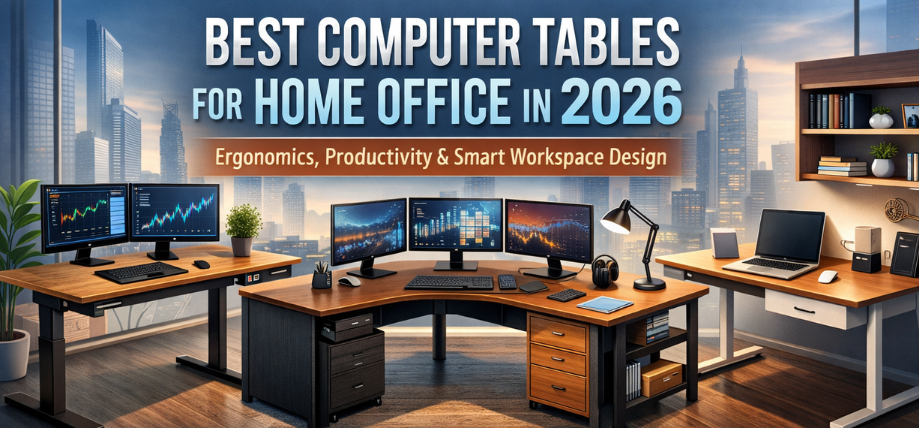
In the modern era of remote work, hybrid offices, content creation, and digital productivity, the demand for the best computer tables for home office has surged dramatically. A computer table is no longer a basic utility—it is a strategic workstation foundation that directly impacts efficiency, posture, organization, and long-term comfort.
We present a comprehensive, high-performance, and expertly structured guide to the best computer tables for home office in 2026, engineered to deliver maximum functionality, ergonomic support, intelligent storage, and premium aesthetics.
What Defines the Best Computer Table for Home Office
A high-quality computer table is designed to optimize workflow, enhance comfort, and support modern technology setups. The best options combine:
- Ergonomic dimensions for long working hours
- Spacious surface area for multi-device setups
- Integrated cable management systems
- Durable materials for long-term reliability
- Smart storage and modular functionality
These features create a high-efficiency workstation tailored for modern home office environments.
Key Features of High-Performance Computer Tables
Ergonomic Design for Long Hours
Ergonomics plays a crucial role in home office productivity. The best tables ensure:
- Proper desk height (70–75 cm standard)
- Adequate legroom
- Comfortable arm positioning
This results in reduced fatigue and improved posture.
Spacious Work Surface
A premium computer table offers:
- Space for dual or triple monitors
- Keyboard and mouse setup
- Additional devices like printers, speakers, and notebooks
A clutter-free surface enhances focus and workflow efficiency.
Cable Management Systems
Modern tables integrate:
- Cable trays
- Grommet holes
- Under-desk routing systems
These features maintain a clean, organized workspace.
Storage & Organization
Smart storage solutions include:
- Drawers and cabinets
- Open shelves
- CPU holders and keyboard trays
This ensures efficient organization of accessories and documents.
Durable Materials & Build Quality
Top materials used:
- Engineered wood for affordability and strength
- Solid wood for premium durability
- Metal frames for structural stability
Aesthetic Design & Workspace Integration
Modern computer tables are designed to:
- Match home interiors
- Enhance visual appeal
- Maintain minimalist aesthetics
Types of Computer Tables for Home Office
Standard Computer Tables
Simple and functional:
- Straightforward design
- Moderate surface area
- Ideal for everyday tasks
L-Shaped Computer Tables
Maximize workspace:
- Corner placement
- Multi-tasking zones
- Large surface area
Perfect for professionals and creators.
Standing Computer Tables
Health-focused design:
- Adjustable height
- Sit-stand flexibility
- Improved posture
Compact Computer Tables
Designed for small spaces:
- Minimal footprint
- Efficient layout
- Ideal for apartments
Executive Computer Tables
Premium design and features:
- Large surface
- High-end materials
- Sophisticated aesthetics
Best Computer Tables for Home Office in 2026 (Top Picks)
Premium Adjustable Standing Desk
A top-tier choice offering:
- Electric height adjustment
- Memory presets
- High weight capacity
Ideal for health-conscious professionals.
L-Shaped Multi-Functional Desk
Designed for efficiency:
- Expansive workspace
- Multiple zones for work and devices
- Corner optimization
Perfect for multi-tasking and productivity.
Compact Space-Saving Computer Table
Efficient and practical:
- Small footprint
- Essential features
- Lightweight design
Best for small rooms and minimal setups.
Computer Table with Storage Shelves
Organization-focused:
- Integrated shelving
- Dedicated compartments
- Clean workspace layout
Ideal for students and professionals.
Minimalist Modern Desk
Sleek and stylish:
- Clean lines
- Durable construction
- Minimal design
Perfect for modern home offices.
Home Office Setup Optimization Tips
Monitor Placement
Position screens at:
- Eye level
- Proper distance
- Minimal glare
Keyboard & Mouse Alignment
Ensure:
- Natural wrist position
- Comfortable arm angle
- Reduced strain
Cable Management
Use:
- Cable clips
- Velcro ties
- Under-desk trays
Lighting Setup
Optimize with:
- Natural light
- Desk lamps
- Ambient lighting
Materials Comparison for Computer Tables
| Material Type | Durability | Aesthetic Appeal | Maintenance | Best Use Case |
|---|---|---|---|---|
| Engineered Wood | High | Modern | Easy | Daily use |
| Solid Wood | Very High | Premium | Moderate | Long-term use |
| Metal Frame | High | Industrial | Easy | Heavy setups |
| Glass | Moderate | Stylish | High | Light setups |
Benefits of Using a Computer Table in Home Office
A well-designed computer table provides:
- Improved productivity and workflow efficiency
- Better posture and reduced physical strain
- Organized and clutter-free workspace
- Enhanced focus and comfort
- Professional and aesthetic workspace setup
Computer Table vs Regular Desk
| Feature | Computer Table | Regular Desk |
|---|---|---|
| Functionality | Multi-device support | Basic usage |
| Storage | Integrated | Limited |
| Ergonomics | Optimized | Standard |
| Cable Management | Advanced | Minimal |
| Design | Workspace-focused | General-purpose |
Latest Trends in Computer Tables (2026)
Emerging innovations include:
- Smart desks with integrated charging ports
- Modular and customizable designs
- Wireless charging surfaces
- AI-assisted height adjustment systems
These advancements are transforming computer tables into intelligent productivity hubs.
How to Choose the Best Computer Table for Home Office
Consider the following factors:
- Room size and layout
- Number of devices and monitors
- Storage requirements
- Budget and material preference
- Ergonomic needs
A well-chosen table ensures maximum efficiency and long-term usability.
Conclusion
The best computer tables for home office combine ergonomic design, smart functionality, and durable construction to create a workspace that enhances both productivity and comfort. Investing in the right table transforms your home office into a high-performance environment tailored for modern work demands.
A premium computer table is not just furniture—it is a core productivity tool that supports efficiency, organization, and long-term well-being.
FAQs
1. What is the best computer table for home office?
A desk with ergonomic design and sufficient space.
2. Are standing desks worth it?
Yes, they improve posture and health.
3. What size is ideal?
120–160 cm width for most setups.
4. Are L-shaped desks better?
Yes, for multitasking.
5. What material is best?
Engineered wood or metal frames.
6. Do computer tables improve productivity?
Yes, significantly.
7. Is cable management important?
Yes, for organization.
8. Can small desks be effective?
Yes, with proper design.
9. What height should a desk be?
70–75 cm standard.
10. Are storage options necessary?
Highly recommended.
11. Can desks hold heavy PCs?
Yes, if built well.
12. Are minimalist desks good?
Yes, for clean setups.
13. What is weight capacity?
Varies, typically 50–100 kg.
14. How to maintain a desk?
Regular cleaning and care.
15. Are glass desks durable?
Moderately.
16. Can I use a regular table?
Yes, but limited features.
17. Do desks affect posture?
Yes, significantly.
18. Are adjustable desks better?
Yes, for flexibility.
19. What accessories should I add?
Monitor stand, cable tray.
20. Are corner desks useful?
Yes, space-efficient.
21. How long do desks last?
5–10 years.
22. Can I customize my desk?
Yes.
23. Do desks need lighting?
Yes, for productivity.
24. Are premium desks worth it?
Yes, for durability.
25. What is the best choice overall?
One that fits your needs and space.