
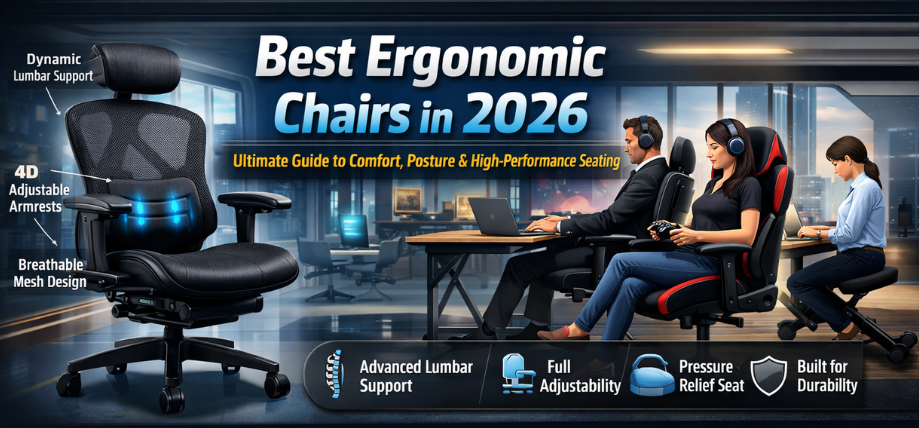
In the modern era of remote work, hybrid offices, gaming environments, and long-duration desk setups, the demand for best ergonomic chairs has reached unprecedented levels. Seating is no longer a passive element—it is a critical performance tool that directly influences productivity, posture, spinal health, and long-term physical well-being.
We present a comprehensive, precision-driven, and high-performance guide to the best ergonomic chairs in 2026, engineered to deliver advanced lumbar support, superior adjustability, and unmatched sitting comfort for professionals, gamers, and intensive users.
What Defines the Best Ergonomic Chairs in 2026
An ergonomic chair is designed to support the natural curvature of the spine, maintain neutral body alignment, and reduce strain on muscles and joints. The best ergonomic chairs combine scientific design, premium materials, and intelligent adjustability to create a seating experience that adapts to the user.
Key defining attributes include:
- Dynamic lumbar support systems
- Multi-dimensional adjustability (4D armrests, tilt, recline)
- High-density cushioning or breathable mesh
- Precision-engineered frame durability
- Posture-enhancing backrest contours
These features transform a standard chair into a performance-enhancing ergonomic system.
Core Features of High-Performance Ergonomic Chairs
Advanced Lumbar Support Technology
The foundation of every ergonomic chair lies in its ability to provide targeted lower back support. Premium chairs feature:
- Adjustable lumbar height and depth
- Dynamic support that responds to movement
- Contoured structures that align with spinal curvature
Full-Body Adjustability for Personalized Comfort
The best chairs offer complete customization, including:
- Seat height and seat depth adjustment
- Tilt tension and recline lock positions
- Adjustable armrests (2D, 3D, 4D)
- Headrest height and angle control
This level of adjustability ensures the chair adapts perfectly to individual body types and work styles.
Seat Cushioning & Pressure Distribution
A high-quality seat minimizes pressure on:
- Lower back
- Hips
- Thighs
Top chairs use:
- Memory foam cushioning
- High-resilience foam
- Waterfall seat edges to enhance blood circulation
Breathable Materials & Thermal Comfort
Modern ergonomic chairs prioritize temperature regulation through:
- Mesh backrests for airflow
- Moisture-resistant fabrics
- Ventilated seat designs
This prevents discomfort during long working hours.
Structural Durability & Load Capacity
Premium ergonomic chairs feature:
- Reinforced steel or aluminum frames
- Class-4 gas lift mechanisms
- Weight capacities exceeding 120–150 kg
Durability ensures consistent performance over years of usage.
Types of Ergonomic Chairs in 2026
Mesh Ergonomic Chairs
Designed for maximum breathability and flexibility, these chairs:
- Provide excellent airflow
- Adapt to body movement
- Offer modern aesthetics
Ideal for long-duration sitting in warm environments.
Executive Ergonomic Chairs
Combining luxury and support, these chairs feature:
- Thick cushioning
- High-back design
- Premium upholstery
Perfect for corporate professionals and leadership roles.
Ergonomic Gaming Chairs
Optimized for immersive setups:
- High backrest with headrest support
- Reclining functionality
- Stylish aesthetics
Suitable for gamers and streamers.
Kneeling Ergonomic Chairs
Encouraging active posture:
- Forward tilt seating
- Reduced lower back strain
- Core engagement
Best for short-term posture correction sessions.
Saddle Ergonomic Chairs
Promoting natural spine alignment:
- Open hip angle
- Active sitting posture
- Reduced spinal pressure
Ideal for creative professionals and dynamic work styles.
Best Ergonomic Chairs in 2026 (Top Categories)
Premium Fully Adjustable Ergonomic Chair
A flagship category offering:
- Advanced lumbar systems
- 4D armrests
- Multi-angle recline
Designed for users seeking ultimate comfort and customization.
High-End Mesh Ergonomic Chair
Focused on airflow and flexibility:
- Breathable mesh
- Lightweight structure
- Responsive back support
Perfect for long work sessions in warm climates.
Budget Ergonomic Chair
Affordable yet effective:
- Basic lumbar support
- Essential adjustability
- Durable build
Best for users needing cost-efficient ergonomic solutions.
Heavy-Duty Ergonomic Chair
Engineered for durability:
- High weight capacity
- Reinforced frame
- Wider seating
Ideal for users requiring robust support.
Compact Ergonomic Chair
Space-saving design:
- Minimal footprint
- Essential ergonomic features
- Lightweight construction
Suitable for small home offices.
Ergonomic Setup Optimization for Maximum Comfort
Correct Sitting Position
Maintain:
- Feet flat on the floor
- Knees at a 90-degree angle
- Back fully supported by the chair
Monitor Alignment
Ensure:
- Screen at eye level
- Reduced neck strain
- Proper viewing distance
Desk and Arm Position
Your arms should:
- Rest comfortably at 90 degrees
- Align with desk height
- Keep shoulders relaxed
Movement and Break Strategy
Incorporate:
- Regular breaks every 30–60 minutes
- Stretching exercises
- Standing intervals
Materials Comparison: Choosing the Right Build
| Material Type | Comfort | Breathability | Durability | Best For |
|---|---|---|---|---|
| Mesh | High | Excellent | High | Long hours |
| Leather | Premium | Low | High | Executive use |
| Fabric | Medium | Good | Medium | Daily use |
| Memory Foam | High | Moderate | High | Comfort focus |
Health Benefits of Ergonomic Chairs
Using a high-quality ergonomic chair results in:
- Reduced lower and upper back pain
- Improved spinal alignment
- Enhanced blood circulation
- Increased productivity and focus
- Reduced fatigue during long sessions
These benefits contribute to a sustainable and healthy work lifestyle.
Ergonomic Chairs vs Traditional Chairs
| Feature | Ergonomic Chair | Traditional Chair |
|---|---|---|
| Support | Advanced lumbar & posture | Minimal |
| Comfort | Long-duration optimized | Short-term use |
| Adjustability | High | Limited |
| Health Benefits | Significant | Minimal |
| Durability | High | Moderate |
Future Innovations in Ergonomic Seating (2026 and Beyond)
The evolution of ergonomic chairs includes:
- AI-powered posture tracking systems
- Smart sensors for sitting behavior analysis
- Integrated heating and cooling technology
- Adaptive cushioning that responds in real time
These innovations redefine chairs into intelligent ergonomic ecosystems.
How to Choose the Best Ergonomic Chair
When selecting the right chair, consider:
- Body dimensions (height and weight)
- Daily sitting duration
- Specific back or neck pain concerns
- Budget and feature priorities
- Workspace layout
A carefully selected chair ensures maximum comfort, efficiency, and long-term health benefits.
Conclusion
The best ergonomic chairs are not optional—they are essential tools for modern productivity and health optimization. By combining advanced engineering, superior materials, and intelligent adjustability, these chairs provide a seating experience that enhances both performance and well-being.
Investing in a high-quality ergonomic chair delivers long-term value, improved posture, and sustained comfort, making it one of the most impactful upgrades for any workspace.
FAQs
1. What is an ergonomic chair?
A chair designed to support natural posture and reduce strain.
2. Are ergonomic chairs worth it?
Yes, for long-term comfort and health.
3. What is lumbar support?
Support for the lower back curve.
4. How do I adjust my chair?
Adjust height, lumbar, armrests, and tilt.
5. Are mesh chairs better?
They offer better airflow and flexibility.
6. What is seat depth?
Distance from backrest to seat edge.
7. Can ergonomic chairs fix posture?
They improve posture when used correctly.
8. What height should my chair be?
Feet flat, knees at 90 degrees.
9. Are expensive chairs better?
Usually, due to better materials and features.
10. Do armrests matter?
Yes, for shoulder and neck support.
11. What is tilt tension?
Resistance when reclining.
12. How long can I sit?
Take breaks every 30–60 minutes.
13. Are gaming chairs ergonomic?
Some are, but not all.
14. What material is best?
Mesh for airflow, foam for comfort.
15. Can chairs reduce back pain?
Yes, significantly.
16. Are headrests necessary?
Helpful but optional.
17. How long do chairs last?
5–10 years.
18. What is weight capacity?
Maximum supported load.
19. Do ergonomic chairs improve productivity?
Yes, by reducing discomfort.
20. Can I use cushions instead?
Temporary solution only.
21. Are kneeling chairs effective?
Yes, for posture training.
22. What is 4D armrest?
Adjustable in four directions.
23. Are ergonomic chairs good for gaming?
Yes, for long sessions.
24. Do chairs affect circulation?
Yes, proper design improves it.
25. What is the best ergonomic chair?
One that fits your body and needs.