
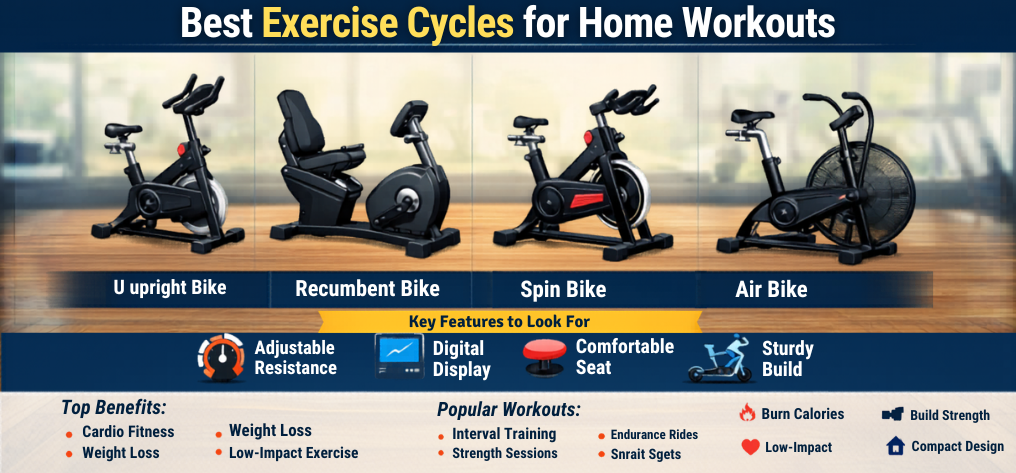
Indoor cycling has become one of the most effective and accessible ways to achieve cardiovascular fitness at home. Exercise cycles deliver powerful calorie-burning workouts, strengthen lower-body muscles, and improve endurance without requiring large spaces or complicated equipment. Whether we are building a home gym or upgrading our current fitness setup, selecting the best exercise cycle can transform daily workouts into a consistent, results-driven routine.
This comprehensive guide explores the best exercise cycles for home workouts, their features, benefits, comparisons, and expert insights into choosing the ideal bike for long-term fitness success.
Why Exercise Cycles Are One of the Best Home Fitness Investments
Exercise cycles combine efficiency, comfort, and versatility, making them one of the most popular cardio machines worldwide. Indoor cycling allows us to perform high-intensity interval training, endurance rides, and steady cardio sessions without leaving the house.
Key advantages include:
-
Low-impact cardiovascular exercise
-
Effective calorie-burning workouts
-
Compact equipment suitable for small spaces
-
Strengthening of legs, glutes, and core
-
Adjustable resistance for all fitness levels
A quality exercise cycle allows us to train safely and consistently regardless of weather conditions, which significantly improves workout adherence and long-term health outcomes.
Types of Exercise Cycles for Home Workouts
Different exercise bikes serve different fitness goals. Understanding the major types helps us select the best indoor cycle for our training style and space requirements.
Upright Exercise Cycles
Upright exercise cycles closely resemble traditional outdoor bicycles. Riders sit in a vertical position with pedals directly below the body.
Key Characteristics
-
Compact and lightweight design
-
Adjustable seat height and handlebars
-
Suitable for moderate to intense workouts
Advantages
-
Natural cycling posture
-
Strong leg muscle activation
-
Space-saving design
Ideal For
-
Beginners
-
Weight loss workouts
-
Home gym setups with limited space
Recumbent Exercise Cycles
Recumbent bikes feature a reclined seating position with back support, making them extremely comfortable.
Key Characteristics
-
Large padded seats
-
Backrest support
-
Pedals positioned in front of the rider
Advantages
-
Reduced pressure on the lower back
-
Joint-friendly workouts
-
Perfect for rehabilitation or seniors
Ideal For
-
Users recovering from injuries
-
Older adults
-
Long-duration cardio sessions
Spin Bikes (Indoor Cycling Bikes)
Spin bikes replicate the experience of road cycling and professional training sessions.
Key Characteristics
-
Heavy flywheel
-
Adjustable resistance
-
Racing-style handlebars
Advantages
-
High-intensity cardio workouts
-
Professional cycling experience
-
Powerful calorie burning
Ideal For
-
Advanced fitness enthusiasts
-
HIIT training
-
Indoor cycling classes
Air Resistance Exercise Bikes
Air bikes use fan-powered resistance systems that increase difficulty as pedaling speed increases.
Key Characteristics
-
Fan resistance mechanism
-
Moving handlebars for upper-body engagement
-
Extremely challenging workouts
Advantages
-
Full-body exercise
-
Unlimited resistance levels
-
Perfect for high-intensity training
Ideal For
-
Athletes
-
Cross-training workouts
-
Functional fitness routines
Key Features to Look for in the Best Exercise Cycles
Selecting the best exercise cycle requires careful evaluation of performance features.
Resistance System
Resistance determines how challenging the workout becomes.
Common resistance types include:
| Resistance Type | Characteristics |
|---|---|
| Magnetic Resistance | Smooth, quiet operation |
| Friction Resistance | Adjustable intensity |
| Air Resistance | Unlimited difficulty |
| Electromagnetic Resistance | Precision digital control |
Magnetic resistance is particularly popular because it provides quiet, smooth cycling ideal for home environments.
Flywheel Weight
The flywheel influences the smoothness of pedaling motion.
Typical flywheel weights:
-
6–10 kg: Beginner workouts
-
10–18 kg: Intermediate training
-
18–25 kg: Advanced cycling workouts
Heavier flywheels create momentum and stability during intense sessions.
Adjustability and Ergonomics
Comfort is essential for longer cycling sessions.
Important adjustments include:
-
Seat height and depth
-
Handlebar position
-
Pedal straps
-
Seat cushioning
These adjustments ensure correct posture and injury prevention.
Digital Display and Smart Features
Modern exercise cycles include advanced workout tracking technology.
Popular features include:
-
Speed and distance tracking
-
Calorie burn estimation
-
Heart rate monitoring
-
Bluetooth connectivity
-
App integration
These features allow users to monitor performance and stay motivated.
Best Exercise Cycles for Different Fitness Goals
Selecting the right exercise cycle depends on personal training objectives.
Best Exercise Cycles for Weight Loss
Weight-loss-focused exercise cycles prioritize calorie-burning workouts and adjustable resistance levels.
Key features:
-
High resistance range
-
Interval training programs
-
Comfortable seating
Cycling workouts can burn 400–700 calories per hour, making them highly effective for fat loss.
Best Exercise Cycles for Cardio Training
Cardio-focused bikes offer:
-
Smooth pedaling mechanics
-
Heart rate tracking
-
Long endurance ride capabilities
These bikes allow consistent cardiovascular conditioning.
Best Exercise Cycles for Small Apartments
Compact exercise cycles are designed for space efficiency.
Key advantages:
-
Foldable designs
-
Lightweight frames
-
Quiet resistance systems
They fit easily into bedrooms, living rooms, or small home gyms.
Best Exercise Cycles for Seniors
Senior-friendly exercise cycles emphasize:
-
Safety
-
Comfort
-
Stability
Recumbent bikes are especially effective because they provide back support and joint-friendly motion.
Comparison Table of Exercise Cycle Types
| Exercise Cycle Type | Workout Intensity | Comfort Level | Space Requirement |
|---|---|---|---|
| Upright Bike | Moderate | Medium | Small |
| Recumbent Bike | Low to moderate | High | Medium |
| Spin Bike | High | Medium | Medium |
| Air Bike | Very high | Medium | Medium |
Benefits of Using Exercise Cycles at Home
Exercise cycles provide comprehensive health benefits.
Improved Cardiovascular Health
Cycling strengthens the heart and improves circulation.
Effective Calorie Burning
Regular cycling sessions help with:
-
Weight loss
-
Fat reduction
-
Metabolism improvement
Lower Body Strength Development
Cycling strengthens:
-
Quadriceps
-
Hamstrings
-
Glutes
-
Calves
Low-Impact Exercise
Unlike running, cycling places minimal stress on joints, making it suitable for daily workouts.
Popular Indoor Cycling Workouts
Exercise cycles support multiple workout styles.
Beginner Cycling Routine
Duration: 25 minutes
Structure:
-
5-minute warm-up
-
15 minutes steady cycling
-
5-minute cool-down
This routine builds basic endurance and stamina.
Interval Cycling Workout
Interval training boosts metabolism.
Example session:
-
1 minute fast pedaling
-
2 minutes moderate pace
-
Repeat 10 rounds
This method enhances fat burning and cardiovascular fitness.
Endurance Cycling Workout
Duration: 45–60 minutes
Maintain a steady moderate pace to improve endurance and cardiovascular capacity.
Strength Cycling Workout
Increase resistance gradually while pedaling slowly. This builds leg strength and muscular endurance.
Setting Up an Exercise Cycle at Home
Correct placement improves comfort and workout safety.
Ideal setup tips:
-
Place the bike on a non-slip mat
-
Maintain adequate ventilation
-
Keep at least 2 feet of clearance around the bike
This creates a comfortable training environment.
Maintenance Tips for Exercise Cycles
Regular maintenance ensures long-lasting performance.
Important maintenance tasks:
-
Wipe sweat after workouts
-
Check pedal bolts
-
Inspect resistance mechanisms
-
Lubricate moving components
Proper care extends the life of the exercise cycle.
Long-Term Value of Indoor Cycling
Exercise cycles offer consistent and convenient workouts that fit into daily schedules.
Benefits include:
-
Improved stamina
-
Reduced body fat
-
Enhanced muscle tone
-
Better heart health
-
Stress relief
With regular use, indoor cycling becomes a sustainable long-term fitness solution.
FAQs
1. What is the best exercise cycle for home use?
The best exercise cycle combines comfortable seating, adjustable resistance, and durable construction.
2. Are exercise cycles effective for weight loss?
Yes. Regular cycling sessions burn significant calories and improve metabolism.
3. Which exercise cycle is best for beginners?
Upright bikes are ideal for beginners.
4. Are recumbent bikes better for seniors?
Yes. Recumbent bikes provide back support and comfortable seating.
5. How long should a cycling workout be?
Most workouts range from 20 to 45 minutes.
6. Can cycling reduce belly fat?
Yes. Consistent cardio training contributes to overall fat loss.
7. Are exercise cycles safe for daily workouts?
Yes. Cycling is a low-impact activity suitable for daily exercise.
8. Do exercise cycles build leg muscles?
Yes. They strengthen quadriceps, hamstrings, and glutes.
9. What resistance level is best for beginners?
Low to moderate resistance works best initially.
10. Can exercise cycles replace outdoor cycling?
Yes. Indoor cycling provides similar cardiovascular benefits.
11. Do exercise bikes require electricity?
Some advanced bikes require electricity for displays and programs.
12. What is the ideal flywheel weight?
A 10–18 kg flywheel provides smooth performance.
13. Are air bikes good for HIIT training?
Yes. Air bikes are excellent for high-intensity workouts.
14. How often should I use an exercise cycle?
3–5 sessions per week provide excellent results.
15. Can cycling improve heart health?
Yes. Regular cycling strengthens the cardiovascular system.
16. What accessories improve cycling workouts?
Heart rate monitors and padded seats enhance comfort.
17. Is indoor cycling good for endurance?
Yes. Long cycling sessions build stamina.
18. Are exercise cycles noisy?
Magnetic resistance bikes operate very quietly.
19. What is the best exercise cycle for small homes?
Compact upright bikes are ideal for limited space.
20. Can cycling improve mental health?
Yes. Exercise releases endorphins that improve mood.
21. Do exercise cycles support interval training?
Yes. Resistance adjustments allow varied workout intensity.
22. What weight capacity should a bike support?
Most bikes support 250–350 pounds.
23. How do I maintain my exercise cycle?
Regular cleaning and inspection ensure long-term performance.
24. Is indoor cycling suitable for rehabilitation?
Yes. Recumbent bikes are commonly used in rehab programs.
25. What is the most versatile exercise cycle?
Spin bikes offer the widest range of workout intensity.