
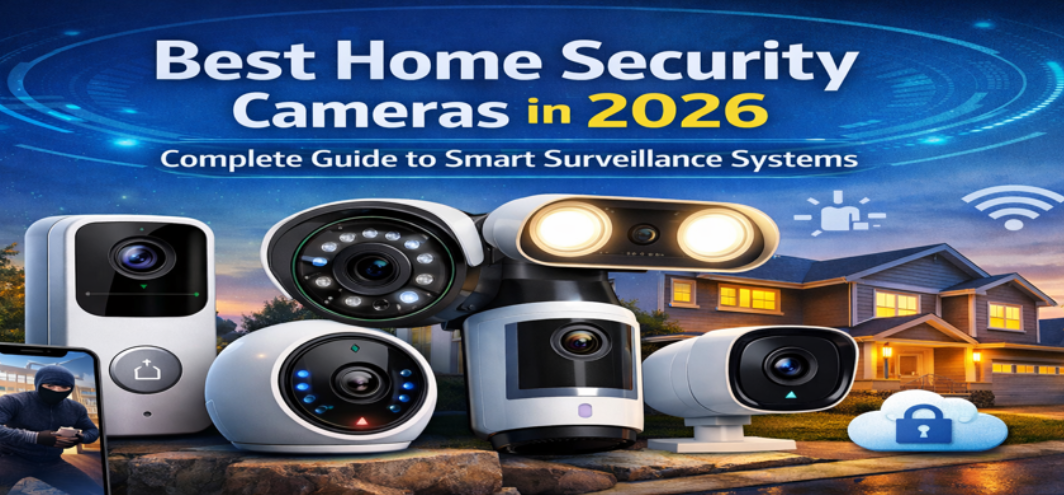
Home security has become a top priority for homeowners and renters alike. As technology evolves, modern home security cameras now offer advanced features such as AI motion detection, night vision, cloud storage, smartphone alerts, and two-way communication. These intelligent surveillance systems allow us to monitor our homes from anywhere, ensuring complete peace of mind.
This comprehensive guide explores the best home security cameras available today, explains key features to look for, compares leading models, and helps homeowners choose the ideal surveillance system for their needs. Whether protecting your home from intruders, monitoring deliveries, or keeping an eye on loved ones, a high-quality smart security camera system is an essential investment.
Why Home Security Cameras Are Essential
A well-installed home surveillance system serves multiple purposes beyond basic monitoring.
Key Benefits
-
Deters potential burglars and intruders
-
Provides real-time monitoring of property
-
Records evidence during security incidents
-
Allows remote access through mobile apps
-
Monitors pets, children, and elderly family members
With the rise of smart homes, Wi-Fi-enabled security cameras integrate seamlessly with voice assistants and home automation systems.
Types of Home Security Cameras
Understanding the different types of cameras helps us select the most suitable option for our home.
Indoor Security Cameras
Indoor cameras are compact and designed for monitoring rooms, hallways, or entry points.
Key Characteristics
-
Lightweight and easy to install
-
Motion detection alerts
-
Two-way audio communication
-
Smartphone integration
These cameras are perfect for monitoring children, pets, and indoor security.
Outdoor Security Cameras
Outdoor cameras are built to withstand harsh environmental conditions.
Key Characteristics
-
Weatherproof construction
-
Wide viewing angles
-
Advanced night vision
-
Motion detection zones
Outdoor cameras are essential for driveways, entrances, garages, and backyards.
Wireless Security Cameras
Wireless cameras connect via Wi-Fi and do not require complex wiring.
Advantages
-
Easy installation
-
Flexible placement
-
Remote viewing
-
Cloud storage support
They are ideal for modern smart homes and renters.
Wired Security Cameras
Wired systems provide consistent power and stable connections.
Advantages
-
Reliable video transmission
-
No battery replacement
-
Suitable for permanent installations
These are commonly used in professional surveillance systems.
Doorbell Security Cameras
Smart doorbell cameras combine a doorbell with video surveillance.
Key Features
-
Motion detection
-
Two-way audio
-
Visitor recording
-
Smartphone alerts
Doorbell cameras are perfect for monitoring deliveries and visitors.
Key Features to Look for in Home Security Cameras
Choosing the best camera requires evaluating several critical features.
High-Resolution Video Quality
Clear video footage is essential for identifying faces and details.
| Resolution | Video Quality |
|---|---|
| 720p | Basic clarity |
| 1080p | Standard HD |
| 2K | Enhanced detail |
| 4K | Ultra HD clarity |
For most homes, 1080p or 2K resolution cameras provide excellent clarity.
Night Vision Technology
Most security incidents occur at night, making infrared night vision essential.
Types of Night Vision
-
Infrared night vision
-
Color night vision
-
Starlight sensors
Advanced models offer full-color night recording.
Motion Detection and AI Alerts
Modern cameras include AI-powered detection systems.
These systems can detect:
-
Humans
-
Vehicles
-
Animals
-
Packages
This prevents unnecessary alerts caused by moving trees or passing cars.
Two-Way Audio Communication
Two-way audio allows us to speak with visitors or warn intruders remotely.
Common uses include:
-
Talking to delivery drivers
-
Communicating with family members
-
Warning suspicious individuals
Cloud Storage and Local Storage
Security cameras store footage either in cloud servers or local memory cards.
| Storage Type | Advantages |
|---|---|
| Cloud Storage | Remote access, automatic backup |
| SD Card Storage | No subscription fees |
| NVR Storage | High capacity recording |
Many homeowners prefer hybrid storage solutions.
Best Home Security Cameras in 2026
Below are some of the top-rated security cameras known for reliability, features, and smart integration.
1. Arlo Pro 5S Smart Security Camera
Key Features
-
2K HDR video resolution
-
Color night vision
-
AI motion detection
-
Weather-resistant design
-
Wireless installation
Advantages
-
Excellent image clarity
-
Smart home integration
-
Long battery life
This camera is ideal for advanced outdoor security monitoring.
2. Google Nest Cam (Battery)
Key Features
-
1080p HD video
-
Intelligent alerts
-
Magnetic mount installation
-
Google Home integration
Advantages
-
Smart AI detection
-
Easy installation
-
Excellent mobile app control
Perfect for smart homes using Google ecosystems.
3. Ring Stick Up Cam
Key Features
-
HD video monitoring
-
Motion detection alerts
-
Alexa compatibility
-
Cloud storage options
Advantages
-
Flexible indoor/outdoor use
-
Reliable brand reputation
-
Affordable price
4. EufyCam 3 Security Camera
Key Features
-
4K ultra HD recording
-
Local storage without subscription
-
Solar charging support
-
Advanced facial recognition
Advantages
-
High video clarity
-
No monthly fees
-
Long battery life
5. Wyze Cam v4
Key Features
-
2K resolution
-
Motion and sound detection
-
Local and cloud storage
-
Affordable pricing
Advantages
-
Budget-friendly
-
Easy setup
-
Reliable performance
Comparison Table of Best Home Security Cameras
| Camera | Resolution | Indoor/Outdoor | Storage | Key Feature |
|---|---|---|---|---|
| Arlo Pro 5S | 2K HDR | Outdoor | Cloud | AI detection |
| Google Nest Cam | 1080p | Indoor/Outdoor | Cloud | Smart alerts |
| Ring Stick Up Cam | 1080p | Indoor/Outdoor | Cloud | Alexa integration |
| EufyCam 3 | 4K | Outdoor | Local | Facial recognition |
| Wyze Cam v4 | 2K | Indoor | Local/Cloud | Budget option |
How to Choose the Best Home Security Camera
Selecting the right camera depends on your home layout and security requirements.
1. Determine Coverage Area
Identify key locations requiring monitoring:
-
Main entrance
-
Backyard
-
Driveway
-
Living room
-
Garage
Strategic placement ensures maximum surveillance coverage.
2. Choose the Right Camera Type
| Location | Recommended Camera |
|---|---|
| Front door | Doorbell camera |
| Backyard | Outdoor camera |
| Living room | Indoor camera |
| Garage | Weatherproof camera |
3. Consider Power Options
Security cameras are powered through:
-
Rechargeable batteries
-
Power adapters
-
Solar panels
-
Wired connections
Battery-powered cameras offer flexible installation.
4. Evaluate Smart Home Compatibility
Smart cameras integrate with:
-
Voice assistants
-
Home automation systems
-
Mobile apps
Popular integrations include voice control and automation routines.
Best Placement for Security Cameras
Correct placement dramatically improves surveillance effectiveness.
Front Door
Covers the most common entry point.
Backyard
Monitors hidden areas vulnerable to break-ins.
Garage
Protects vehicles and storage areas.
Living Room
Monitors indoor movement.
Hallways
Tracks movement across the house.
Security Camera Installation Tips
-
Install cameras 8–10 feet above ground
-
Avoid direct sunlight exposure
-
Ensure stable Wi-Fi connection
-
Position cameras to avoid blind spots
-
Use secure mounting brackets
Common Mistakes When Installing Security Cameras
Avoid these frequent mistakes.
-
Placing cameras too high
-
Ignoring Wi-Fi signal strength
-
Blocking cameras with obstacles
-
Not securing camera passwords
-
Forgetting regular firmware updates
Future Trends in Home Security Cameras
The surveillance industry continues evolving with innovative technology.
AI-Powered Recognition
Future cameras will detect faces, vehicles, and suspicious behavior automatically.
Edge Computing
Processing video locally improves privacy and speed.
Solar-Powered Cameras
Solar cameras eliminate battery maintenance.
Advanced Smart Home Integration
Security systems will seamlessly integrate with smart locks, alarms, and lighting.
Advantages of Smart Security Cameras
Modern security cameras provide significant advantages:
-
24/7 remote monitoring
-
Instant smartphone alerts
-
High-resolution video evidence
-
Deterrence against intruders
-
Integration with smart home systems
FAQs
1. What is the best home security camera?
The best camera depends on needs, but Arlo Pro, Nest Cam, and EufyCam are top choices.
2. Do security cameras work without Wi-Fi?
Yes, some cameras record to local storage without internet.
3. Are wireless cameras reliable?
Yes, modern Wi-Fi cameras provide stable and secure connections.
4. What resolution is best for security cameras?
1080p or 2K resolution offers excellent clarity.
5. Can cameras record at night?
Yes, using infrared or color night vision technology.
6. Do security cameras need subscriptions?
Some require cloud storage subscriptions, others offer free local storage.
7. Are outdoor cameras waterproof?
Yes, most outdoor cameras have weatherproof ratings.
8. How long do camera batteries last?
Typically 2–6 months depending on usage.
9. Can security cameras detect motion?
Yes, most cameras include motion detection alerts.
10. Do cameras record continuously?
Some record 24/7, while others record only when motion is detected.
11. Can security cameras prevent burglaries?
Visible cameras deter many potential intruders.
12. Is local storage better than cloud storage?
Local storage avoids subscriptions but cloud storage offers remote access.
13. How many cameras does a home need?
Most homes require 3–6 cameras.
14. Do cameras work during power outages?
Battery-powered cameras continue working.
15. Are smart cameras secure?
Yes, when strong passwords and encryption are used.
16. Can cameras detect people only?
AI cameras can differentiate humans from objects.
17. What field of view is ideal?
A 120°–160° viewing angle is ideal.
18. Can cameras be hacked?
Using strong passwords and firmware updates reduces risk.
19. Are security cameras legal?
Yes, when used for private property monitoring.
20. Can cameras integrate with alarms?
Yes, many integrate with home security systems.
21. Do cameras record sound?
Many include two-way audio features.
22. Can cameras monitor pets?
Yes, indoor cameras are ideal for pet monitoring.
23. How long is footage stored?
Cloud storage usually keeps footage 7–30 days.
24. Can cameras detect packages?
Some smart cameras include package detection AI.
25. What is the lifespan of security cameras?
Most cameras last 5–10 years.
For more information and to start using Roobai.com, visit our official website and download the app to stay updated on the best deals and offers. With Roobai.com, you can ensure that every shopping experience is not just an opportunity to shop but an opportunity to save big.