
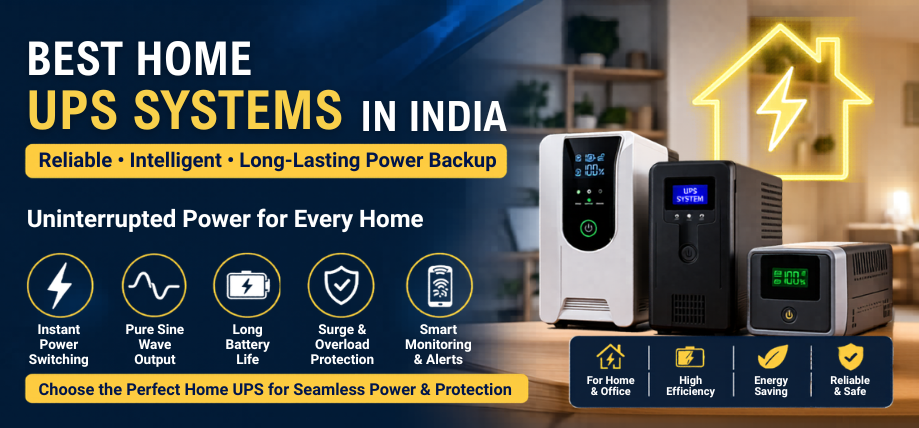
Power disruptions can interrupt productivity, damage sensitive electronics, and disrupt daily life. A high-performance Home UPS system ensures uninterrupted electricity, seamless switching, and complete protection for essential appliances. With advancements in power backup technology, modern UPS systems now deliver pure sine wave output, intelligent battery management, fast charging, and smart monitoring features that redefine reliability.
This in-depth guide explores the best Home UPS systems in India, delivering expert insights, detailed comparisons, feature breakdowns, and strategic buying guidance to help us choose a solution that ensures consistent power, long battery life, and maximum efficiency.
What is a Home UPS System and How It Works
A Home UPS (Uninterruptible Power Supply) is a device that provides instant backup power during outages by converting stored battery energy into usable electricity. Unlike traditional inverters, a UPS offers zero or near-zero switching time, making it ideal for sensitive devices like computers, routers, and medical equipment.
Core functionality includes:
- Automatic power switching
- Battery charging and management
- Voltage regulation and surge protection
- Continuous power delivery without interruptions
Types of Home UPS Systems
1. Offline UPS Systems – Basic Protection
These systems provide power backup during outages with minimal features.
Key attributes:
- Cost-effective
- Simple operation
- Suitable for basic loads
2. Line-Interactive UPS Systems – Balanced Performance
These systems regulate voltage fluctuations and provide efficient backup.
Advantages:
- Built-in voltage stabilizer
- Better efficiency
- Ideal for homes and small offices
3. Online UPS Systems – Premium Power Protection
These deliver uninterrupted, clean power with zero transfer time.
Highlights:
- Continuous power supply
- Advanced voltage regulation
- Best for critical equipment
Top Features to Look for in the Best Home UPS Systems
Pure Sine Wave Output
Ensures safe operation of sensitive electronics and appliances.
Fast Switching Time
Critical for devices like computers and routers.
Battery Compatibility
Supports:
- Tubular batteries for long life
- Lithium-ion batteries for modern performance
Load Capacity
Choose based on total appliance load.
- Small homes: 600–900 VA
- Medium homes: 1000–1500 VA
- Large homes: 1500–3000 VA
Smart Features
- LCD display
- Mobile app connectivity
- Real-time diagnostics
Safety Mechanisms
- Overload protection
- Short circuit protection
- Overcharge protection
Best Home UPS Systems in India (Detailed Analysis)
1. Pure Sine Wave Home UPS
Designed for maximum efficiency and appliance safety, this category is ideal for modern households.
Key strengths:
- Stable output
- Silent operation
- High durability
2. Smart Digital UPS with LCD Display
Perfect for users seeking real-time monitoring and intelligent performance.
Features:
- Digital interface
- Battery status indicators
- Advanced diagnostics
3. Heavy-Duty UPS for Large Homes
Suitable for powering multiple appliances simultaneously.
Advantages:
- High load capacity
- Extended backup time
- Robust design
4. Compact UPS for Apartments
Optimized for limited space.
Highlights:
- Space-saving design
- Efficient power usage
- Easy installation
5. Hybrid Solar UPS Systems
Combines grid power with solar energy.
Benefits:
- Reduced electricity bills
- Eco-friendly operation
- Dual charging modes
Comparison Table: Best Home UPS Systems
| Feature | Offline UPS | Line-Interactive UPS | Online UPS | Solar UPS |
|---|---|---|---|---|
| Switching Time | Moderate | Fast | Instant | Fast |
| Efficiency | Moderate | High | Very High | Very High |
| Cost | Low | Medium | High | High |
| Appliance Safety | Medium | High | Very High | High |
| Best Use Case | Basic Use | Home/Office | Critical | Energy Saving |
Benefits of Installing a Home UPS System
1. Continuous Power Supply
Ensures uninterrupted operation of essential devices.
2. Protection for Sensitive Electronics
Prevents damage caused by voltage fluctuations.
3. Enhanced Productivity
Supports work-from-home and business continuity.
4. Energy Efficiency
Optimized energy usage reduces electricity costs.
Load Calculation: Choosing the Right UPS Capacity
To determine the correct UPS:
- List all appliances
- Calculate total wattage
- Add safety margin (20–25%)
- Select appropriate VA rating
Best Batteries for Home UPS Systems
Flat Plate Batteries
- Budget-friendly
- Short lifespan
Tubular Batteries
- Long-lasting
- Reliable performance
Lithium-Ion Batteries
- Lightweight
- Fast charging
- Maintenance-free
Installation Tips for Maximum Performance
- Install in a ventilated space
- Avoid exposure to heat and moisture
- Use proper earthing
- Ensure professional installation
Maintenance Tips for Long-Term Efficiency
- Check battery levels regularly
- Clean terminals to avoid corrosion
- Avoid overloading
- Perform periodic servicing
Common Mistakes to Avoid
- Choosing insufficient capacity
- Ignoring battery compatibility
- Overlooking safety features
- Improper installation
Home UPS vs Inverter: Key Differences
| Feature | Home UPS | Inverter |
|---|---|---|
| Switching Time | Instant | Slight delay |
| Power Quality | Clean and stable | Moderate |
| Use Case | Sensitive electronics | General appliances |
| Cost | Higher | Lower |
Future Trends in Home UPS Technology
- Smart AI-based energy management
- Integration with smart home systems
- Lithium battery adoption
- Solar hybrid solutions
Conclusion: Power Stability for Modern Living
A high-quality Home UPS system ensures reliable power backup, superior appliance protection, and long-term efficiency. By selecting the right system based on capacity, features, and battery type, we achieve uninterrupted comfort, productivity, and peace of mind.
FAQs
1. What is the best Home UPS system?
A pure sine wave line-interactive UPS is ideal.
2. What is VA rating?
It indicates power capacity.
3. How long does UPS backup last?
Depends on battery and load.
4. Can UPS run an AC?
Only high-capacity systems can.
5. Which battery is best?
Tubular batteries are widely preferred.
6. What is switching time?
Time taken to switch to backup power.
7. Are UPS systems safe?
Yes, with built-in protections.
8. Can UPS power computers?
Yes, they are designed for it.
9. What is backup time?
Duration of power supply during outage.
10. Are solar UPS systems good?
Yes, for energy savings.
11. How often should batteries be maintained?
Monthly checks are recommended.
12. What is overload protection?
Prevents system damage.
13. Can UPS run refrigerator?
Yes, with sufficient capacity.
14. What is charging time?
Usually 6–10 hours.
15. Are lithium batteries better?
Yes, but more expensive.
16. Can UPS power Wi-Fi routers?
Yes, easily.
17. What happens during overload?
UPS shuts down for safety.
18. How to increase backup time?
Use higher capacity batteries.
19. Are UPS systems eco-friendly?
Yes, especially solar models.
20. Can UPS be used in offices?
Yes, for uninterrupted operations.
21. Do UPS systems consume electricity?
Minimal consumption.
22. What is hybrid UPS?
Supports grid and solar power.
23. Can UPS damage appliances?
No, it protects them.
24. How long do UPS systems last?
Typically 8–10 years.
25. Is installation difficult?
Professional installation is recommended.