
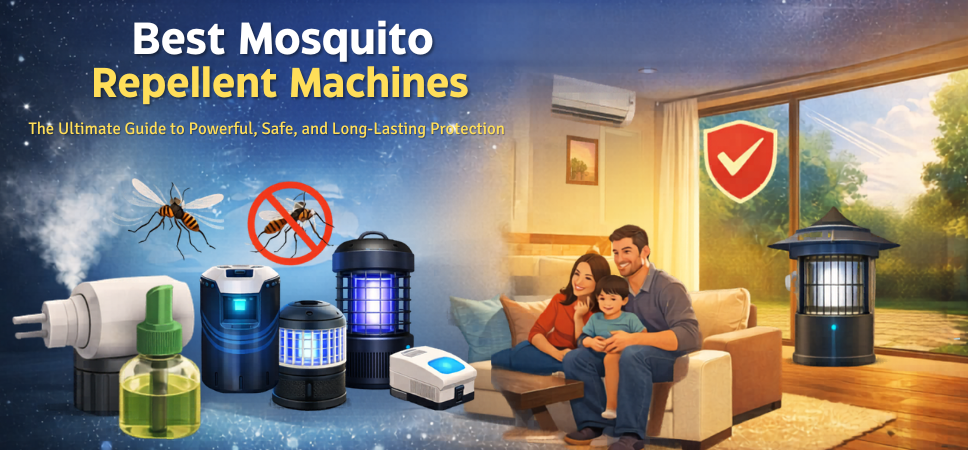
Mosquitoes are more than a nuisance—they are carriers of dangerous diseases and disruptors of peaceful living. In modern homes, mosquito repellent machines have become an essential solution for ensuring continuous protection, convenience, and safety. In this comprehensive guide, we explore the best mosquito repellent machines, their technology, benefits, usage, and selection criteria, helping you choose the most effective solution for your home.
Why Mosquito Repellent Machines Are Essential for Every Home
Mosquito control is no longer optional. Traditional methods like coils and sprays often fail to provide consistent, long-term coverage and may introduce harmful chemicals into the air. Repellent machines, on the other hand, offer:
- 24/7 protection without constant reapplication
- Low energy consumption
- Minimal human intervention
- Safe indoor usage
- Targeted mosquito elimination
We rely on these devices to create a mosquito-free environment while maintaining indoor air quality and comfort.
Types of Mosquito Repellent Machines
Understanding the different types of machines allows us to select the most effective solution for our needs.
1. Liquid Vaporizer Machines
These are the most widely used mosquito repellent machines. They work by heating a liquid insecticide that evaporates into the air.
Key Benefits
- Consistent vapor release
- Affordable and easily available
- Effective for small to medium rooms
2. Ultrasonic Repellent Machines
Ultrasonic devices emit high-frequency sound waves that are inaudible to humans but disturb mosquitoes.
Key Benefits
- Chemical-free operation
- Eco-friendly and safe
- No smell or smoke
3. Electric Mosquito Traps
These machines attract mosquitoes using UV light, heat, or carbon dioxide, then trap or kill them.
Key Benefits
- Highly effective in large areas
- No chemical exposure
- Reusable and low maintenance
4. Mosquito Killer Lamps
These combine light attraction with electric grids to eliminate mosquitoes instantly.
Key Benefits
- Instant kill mechanism
- Suitable for indoor and outdoor use
- Stylish modern designs
5. Plug-in Mat Machines
These use insecticide-coated mats that release fumes when heated.
Key Benefits
- Portable and simple
- Budget-friendly
- Ideal for occasional use
How Mosquito Repellent Machines Work
Modern mosquito machines use advanced technologies to disrupt mosquito behavior and eliminate them effectively:
- Thermal evaporation for liquid vaporizers
- Ultrasonic frequencies to repel
- Photocatalytic reactions in UV traps
- Electric grids for instant extermination
Each method ensures maximum efficiency with minimal human involvement, making them ideal for everyday use.
Key Features to Consider Before Buying
Choosing the right mosquito repellent machine requires evaluating several critical factors:
1. Coverage Area
Select a machine that matches your room size. Larger areas require high-capacity or trap-based devices.
2. Safety
Look for:
- Child-safe designs
- Low toxicity chemicals
- Auto shut-off features
3. Power Consumption
Energy-efficient devices reduce electricity costs while offering continuous protection.
4. Noise Levels
Silent or ultra-quiet machines are ideal for bedrooms and offices.
5. Maintenance Requirements
Choose machines with:
- Easy refilling systems
- Replaceable cartridges
- Simple cleaning mechanisms
Top Benefits of Using Mosquito Repellent Machines
1. Continuous Protection
Unlike sprays, machines offer non-stop mosquito control throughout the night.
2. Health Safety
High-quality machines use controlled chemical release or are completely chemical-free.
3. Convenience
Once plugged in, these devices require minimal effort.
4. Eco-Friendly Options
Ultrasonic and trap-based machines reduce environmental impact.
5. Cost-Effective
Long-term use is significantly cheaper than repeated sprays or coils.
Best Mosquito Repellent Machine Technologies Explained
Heat-Based Vaporization
Ensures even distribution of repellent across the room.
Ultrasonic Wave Emission
Creates an environment where mosquitoes cannot survive or settle.
UV Light Attraction
Draws mosquitoes toward a killing or trapping mechanism.
COâ Simulation
Mimics human breath, attracting mosquitoes into traps.
Indoor vs Outdoor Mosquito Repellent Machines
| Feature | Indoor Machines | Outdoor Machines |
|---|---|---|
| Coverage | Small to medium rooms | Large open spaces |
| Power | Low consumption | Higher output |
| Design | Compact and quiet | Durable and weather-resistant |
| Technology | Vaporizer, ultrasonic | UV traps, COâ attractants |
| Maintenance | Low | Moderate |
How to Use Mosquito Repellent Machines Effectively
To maximize performance:
- Place machines away from open windows
- Use in closed or semi-closed environments
- Replace refills on time
- Keep devices clean and dust-free
- Operate during peak mosquito hours (evening and night)
Safety Tips for Long-Term Use
- Avoid direct inhalation of vapors
- Keep away from children and pets
- Use certified products only
- Do not mix different chemical refills
- Turn off when not needed for extended periods
Common Mistakes to Avoid
- Using low-quality refills
- Placing machines in ineffective positions
- Ignoring maintenance schedules
- Overusing chemical-based devices
- Expecting instant results from ultrasonic devices
Best Rooms to Use Mosquito Repellent Machines
- Bedrooms for uninterrupted sleep
- Living rooms for family comfort
- Kitchens to maintain hygiene
- Offices for productivity without disturbance
Advantages Over Traditional Mosquito Control Methods
| Feature | Machines | Coils & Sprays |
|---|---|---|
| Safety | High | Moderate to low |
| Convenience | High | Low |
| Continuous Use | Yes | No |
| Air Quality | Maintained | Often compromised |
| Cost Efficiency | Long-term savings | Recurring cost |
Future of Mosquito Repellent Technology
The industry is evolving toward:
- Smart IoT-enabled repellents
- AI-based mosquito detection systems
- Solar-powered outdoor traps
- Chemical-free advanced repellents
These innovations promise greater efficiency, sustainability, and automation.
Conclusion
Mosquito repellent machines are a modern necessity for maintaining a safe and comfortable living environment. With advancements in technology, these devices now offer high efficiency, low maintenance, and superior protection. By choosing the right type and using it effectively, we can ensure complete mosquito control without compromising health or convenience.
FAQs
1. Are mosquito repellent machines safe for daily use?
Yes, especially certified and high-quality devices.
2. Can we use them overnight?
Yes, they are designed for continuous operation.
3. Do ultrasonic repellents really work?
Effectiveness varies but they are useful as a chemical-free option.
4. Are liquid vaporizers harmful?
When used correctly, they are safe.
5. Which type is best for large rooms?
Electric traps or high-capacity vaporizers.
6. Do they consume a lot of electricity?
No, most are energy-efficient.
7. Can children stay in rooms with these devices?
Yes, if safety guidelines are followed.
8. How often should refills be changed?
Typically every 30–45 days.
9. Do mosquito lamps work instantly?
Yes, they kill mosquitoes on contact.
10. Are these devices portable?
Many models are compact and travel-friendly.
11. Can they be used outdoors?
Only specific outdoor models.
12. Do they emit smoke?
No, modern devices are smoke-free.
13. Are they better than sprays?
Yes, for continuous protection.
14. Can we use multiple devices in one room?
Yes, for larger spaces.
15. Do they kill or repel mosquitoes?
Depends on the type.
16. Are refill liquids expensive?
Generally affordable.
17. Do they require installation?
No, just plug-and-use.
18. Can pets stay near them?
Yes, but avoid direct exposure.
19. Do they work on all mosquito species?
Most common species are affected.
20. Are there odorless options?
Yes, especially ultrasonic devices.
21. Can they replace mosquito nets?
They can reduce dependence on nets.
22. Do they affect sleep?
No, most are silent.
23. How long do machines last?
Several years with proper care.
24. Are eco-friendly options available?
Yes, ultrasonic and trap-based models.
25. Do they require cleaning?
Yes, periodic maintenance is recommended.