
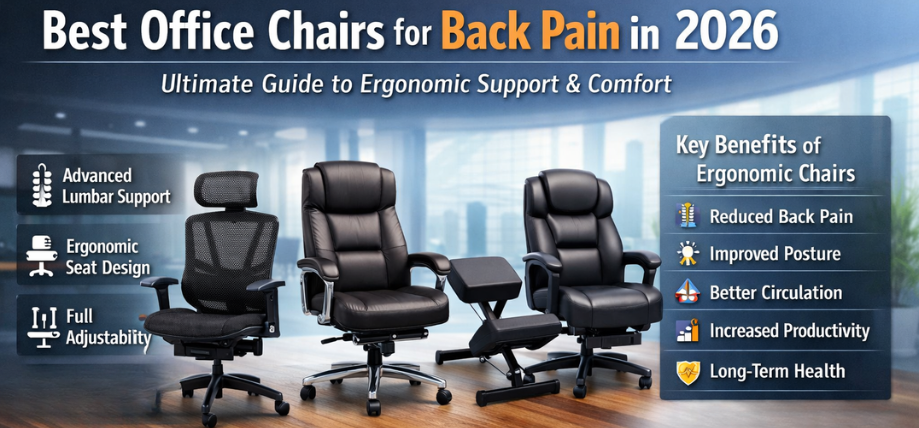
In today’s high-performance work environments, where professionals spend extended hours seated at desks, the importance of a proper ergonomic office chair for back pain has never been greater. A poorly designed chair can lead to chronic discomfort, spinal misalignment, reduced productivity, and long-term health issues. Conversely, a well-engineered ergonomic chair delivers targeted lumbar support, posture correction, and pressure distribution, transforming the way we work and live.
We present a comprehensive, high-performance, and deeply optimized guide to the best office chairs for back pain in 2026, curated to deliver maximum comfort, medical-grade support, and premium durability for professionals, remote workers, and intensive users.
Why Choosing the Right Office Chair for Back Pain Is Critical
Back pain is often caused by prolonged sitting, poor posture, and inadequate lumbar support. The right office chair acts as a corrective tool, ensuring:
- Neutral spine alignment for reduced strain
- Dynamic lumbar support that adapts to your posture
- Even weight distribution to eliminate pressure points
- Improved circulation and reduced fatigue
- Enhanced productivity and focus
A high-quality ergonomic chair is not just furniture—it is a health investment that directly impacts your daily performance and long-term well-being.
Key Features of the Best Office Chairs for Back Pain
Advanced Lumbar Support Systems
The foundation of any back pain relief chair lies in its lumbar support mechanism. The best chairs feature:
- Adjustable lumbar depth and height
- Dynamic support that moves with your spine
- Contoured backrests that mimic natural curvature
Ergonomic Seat Design & Cushioning
A properly designed seat ensures:
- Pressure relief on hips and thighs
- High-density foam or memory foam cushioning
- Waterfall seat edges to improve circulation
Adjustability & Customization
Top-tier ergonomic chairs offer:
- Adjustable seat height and depth
- Recline tension and tilt lock
- Adjustable armrests (2D, 3D, or 4D)
Breathable Materials
Premium chairs use:
- Mesh backs for airflow
- High-quality fabric or leather for durability
- Sweat-resistant and temperature-regulating materials
Headrest & Neck Support
For full spinal alignment:
- Adjustable headrests reduce neck strain
- Supports cervical spine during reclining
Build Quality & Durability
A high-performance chair includes:
- Steel or aluminum frames
- Class-4 gas lifts
- High weight capacity for long-term reliability
Types of Office Chairs for Back Pain Relief
Ergonomic Mesh Chairs
Designed for maximum airflow and flexibility:
- Breathable mesh back
- Adaptive lumbar support
- Lightweight and modern design
Executive Chairs with Lumbar Support
Premium comfort and aesthetics:
- Thick cushioning
- High backrest
- Ideal for long working hours
Kneeling Chairs
Alternative posture solution:
- Encourages forward tilt
- Reduces lower back pressure
- Suitable for short sessions
Saddle Chairs
Promotes active sitting:
- Open hip angle
- Engages core muscles
- Improves posture naturally
Reclining Ergonomic Chairs
Best for relaxation and support:
- Deep recline angles
- Footrest integration
- Ideal for hybrid work-rest setups
Best Office Chairs for Back Pain in 2026 (Top Picks)
Premium Ergonomic Mesh Chair
A top-tier solution offering:
- Dynamic lumbar support
- Full adjustability
- Breathable mesh design
Ideal for professionals seeking long-duration comfort and posture correction.
High-End Executive Ergonomic Chair
Luxury meets performance:
- Plush cushioning
- Advanced tilt mechanisms
- Superior lumbar support
Perfect for those who prefer comfort with executive aesthetics.
Budget Ergonomic Chair
Affordable yet effective:
- Basic lumbar support
- Adjustable height and tilt
- Durable frame
Best for users needing cost-effective back pain relief solutions.
Heavy-Duty Ergonomic Chair
Built for durability:
- High weight capacity
- Reinforced frame
- Extra-wide seating
Ideal for users requiring robust support and long-term reliability.
Compact Ergonomic Chair
Designed for smaller spaces:
- Space-efficient design
- Essential ergonomic features
- Lightweight construction
Perfect for home offices and limited spaces.
Ergonomic Setup Tips for Maximum Back Pain Relief
Correct Sitting Posture
Maintain:
- Feet flat on the ground
- Knees at 90-degree angle
- Back fully supported
Monitor Positioning
Ensure:
- Screen at eye level
- Minimal neck strain
- Proper viewing distance
Desk Height Alignment
Your desk should allow:
- Elbows at 90 degrees
- Relaxed shoulders
- Neutral wrist position
Movement & Breaks
Incorporate:
- Micro breaks every 30–60 minutes
- Stretching exercises
- Standing intervals
Materials Comparison for Office Chairs
| Material Type | Comfort Level | Breathability | Durability | Best Use Case |
|---|---|---|---|---|
| Mesh | High | Excellent | High | Long hours |
| Leather | Premium | Low | High | Executive use |
| Fabric | Moderate | Good | Medium | Daily use |
| Memory Foam | High | Moderate | High | Comfort focus |
Health Benefits of Ergonomic Chairs
Investing in the best office chair for back pain provides:
- Reduced lower back pain and stiffness
- Improved spinal alignment
- Enhanced blood circulation
- Increased productivity
- Better long-term posture habits
These benefits contribute to a healthier and more efficient work lifestyle.
Office Chair vs Regular Chair: Key Differences
| Feature | Ergonomic Office Chair | Regular Chair |
|---|---|---|
| Lumbar Support | Advanced & adjustable | Minimal or none |
| Comfort | Long-duration optimized | Short-term use |
| Adjustability | High | Limited |
| Posture Support | Excellent | Poor |
| Durability | High | Moderate |
Future Trends in Ergonomic Office Chairs (2026 and Beyond)
The next generation of office chairs is evolving with:
- AI-driven posture correction systems
- Smart sensors for sitting habits
- Integrated heating and cooling systems
- Adaptive cushioning technologies
These innovations are redefining chairs into intelligent ergonomic systems.
How to Choose the Best Office Chair for Back Pain
When selecting a chair, consider:
- Your height and weight requirements
- Duration of daily usage
- Type of back pain (lower, upper, or full spine)
- Budget and feature priorities
- Workspace size and aesthetics
Choosing the right chair ensures long-term comfort, health, and productivity.
Conclusion
The right office chair is a powerful solution for back pain prevention and relief. By prioritizing ergonomic design, adjustability, and high-quality materials, you can transform your workspace into a health-focused, productivity-enhancing environment.
A premium ergonomic chair is not an expense—it is an essential investment in your well-being and performance.
FAQs
1. What is the best chair for lower back pain?
An ergonomic chair with adjustable lumbar support is ideal.
2. Are mesh chairs good for back pain?
Yes, they provide breathability and flexible support.
3. How important is lumbar support?
It is critical for maintaining natural spine curvature.
4. Can office chairs fix posture?
They help improve posture when used correctly.
5. What seat height is ideal?
Feet flat with knees at 90 degrees.
6. Are expensive chairs worth it?
Yes, for long-term comfort and durability.
7. How long should I sit continuously?
Take breaks every 30–60 minutes.
8. Do armrests matter?
Yes, they reduce shoulder and neck strain.
9. What is seat depth?
Distance from backrest to front edge of seat.
10. Is memory foam good?
Yes, for pressure relief and comfort.
11. Are reclining chairs better?
They reduce spinal pressure during breaks.
12. What is tilt tension?
Controls resistance when reclining.
13. Can chairs reduce neck pain?
Yes, with proper headrest support.
14. Are gaming chairs good for back pain?
Some are, but ergonomic chairs are better.
15. What material is best?
Mesh for airflow, foam for comfort.
16. How to clean office chairs?
Use mild cleaners and regular maintenance.
17. Do wheels matter?
Yes, for mobility and convenience.
18. What is weight capacity?
Maximum load the chair supports.
19. Can I use a cushion instead?
Temporary solution, not a replacement.
20. Are kneeling chairs effective?
Yes, for short-term posture improvement.
21. What is ergonomic design?
Design that supports natural body posture.
22. Do chairs affect productivity?
Yes, significantly.
23. How long do chairs last?
5–10 years depending on quality.
24. Are headrests necessary?
Helpful but not mandatory.
25. Can chairs prevent back pain?
Yes, when combined with proper posture.