
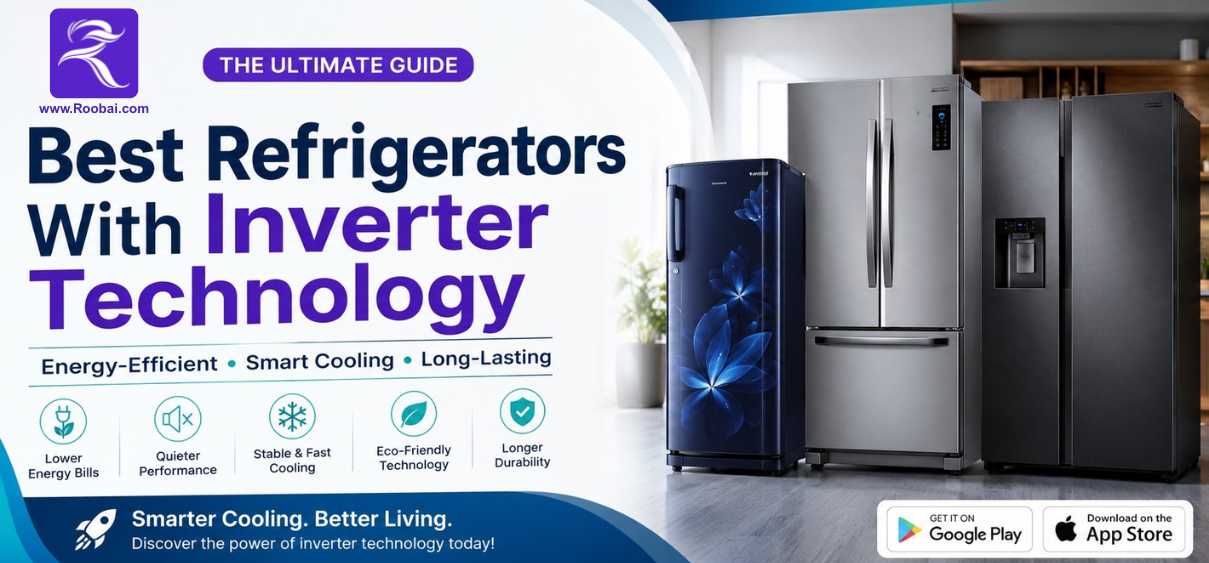
Modern refrigeration has evolved dramatically, and one of the biggest innovations transforming household appliances today is inverter compressor technology. Traditional refrigerators once consumed excessive electricity, produced noticeable operational noise, and delivered inconsistent cooling performance. However, the best refrigerators with inverter technology now offer highly efficient cooling systems, intelligent temperature management, reduced energy consumption, quieter performance, and longer-lasting durability.
Inverter refrigerators have become increasingly popular because they combine advanced engineering with practical everyday benefits. Whether we need a compact refrigerator for apartments, a double-door family refrigerator, a side-by-side premium model, or a convertible frost-free refrigerator for modern kitchens, inverter technology delivers superior performance across every category.
Today’s inverter refrigerators include advanced features such as:
- Smart inverter compressors
- Multi-airflow cooling systems
- Frost-free operation
- Convertible freezer modes
- AI temperature optimization
- Stabilizer-free functionality
- Smart sensors
- Energy-saving modes
- Digital temperature controls
- Wi-Fi and smart home compatibility
This complete guide explores everything we need to know about the best refrigerators with inverter technology, including how inverter compressors work, energy-saving benefits, cooling performance, smart features, maintenance, refrigerator types, and the top inverter refrigerators available today.
What Is Inverter Technology in Refrigerators?
Inverter technology refers to advanced compressor systems capable of dynamically adjusting cooling power according to refrigeration demand.
Unlike traditional compressors that:
- Turn fully ON
- Turn completely OFF
- Restart repeatedly
Inverter compressors continuously operate at variable speeds to maintain stable temperatures more efficiently.
This intelligent cooling approach offers several advantages:
- Lower electricity consumption
- Reduced compressor wear
- Better cooling consistency
- Quieter operation
- Faster temperature recovery
- Improved food freshness
Inverter refrigerators have become one of the most energy-efficient appliance categories in modern homes.
How Inverter Compressors Work
Traditional compressors operate at fixed speeds. When cooling is required, they start at full power and shut off completely after reaching target temperatures.
Inverter compressors work differently.
They continuously:
- Monitor internal temperatures
- Adjust cooling intensity
- Maintain stable airflow
- Reduce sudden power spikes
This variable-speed operation minimizes unnecessary energy consumption.
Benefits of Refrigerators With Inverter Technology
Modern inverter refrigerators provide numerous performance advantages.
Major benefits include:
- Lower electricity bills
- Quieter operation
- Longer compressor lifespan
- More consistent cooling
- Reduced temperature fluctuations
- Better food preservation
- Eco-friendly operation
- Improved durability
- Enhanced energy efficiency
- Reduced maintenance requirements
These advantages make inverter refrigerators extremely popular among modern households.
Why Inverter Refrigerators Save Electricity
One of the biggest advantages of inverter refrigerators is reduced energy consumption.
Traditional compressors:
- Frequently restart
- Consume high startup power
- Operate inefficiently
Inverter compressors:
- Run continuously at optimized speeds
- Avoid high startup energy spikes
- Use only the required cooling power
This intelligent operation significantly reduces electricity usage over time.
Single Door vs Double Door Inverter Refrigerators
Consumers often compare refrigerator categories before purchasing.
| Feature | Single Door Inverter | Double Door Inverter |
|---|---|---|
| Price | Lower | Higher |
| Capacity | Smaller | Larger |
| Energy Efficiency | Excellent | Very Good |
| Frost-Free Cooling | Rare | Common |
| Storage Space | Compact | Spacious |
| Best For | Small households | Families |
Both categories benefit greatly from inverter technology.
Types of Refrigerators With Inverter Technology
Modern inverter compressors are available across multiple refrigerator styles.
| Refrigerator Type | Best For | Key Advantages |
|---|---|---|
| Single Door Refrigerator | Budget buyers | Excellent efficiency |
| Double Door Refrigerator | Families | Frost-free convenience |
| Side-by-Side Refrigerator | Premium kitchens | Large storage capacity |
| French Door Refrigerator | Luxury homes | Wide compartments |
| Bottom Freezer Refrigerator | Easy access | Ergonomic design |
| Convertible Refrigerator | Flexible storage | Smart cooling modes |
Inverter technology improves efficiency across all categories.
Frost-Free Inverter Refrigerators
Frost-free refrigerators automatically prevent ice buildup using advanced airflow systems.
Benefits include:
- No manual defrosting
- Better airflow distribution
- Uniform cooling
- Improved convenience
- Faster temperature stabilization
Combining frost-free systems with inverter compressors creates highly efficient refrigeration performance.
Best Inverter Refrigerators for Energy Savings
Energy efficiency is one of the biggest reasons consumers prefer inverter refrigerators.
Key energy-saving technologies include:
- Smart inverter compressors
- Multi-airflow systems
- AI cooling optimization
- Eco modes
- LED lighting
- Advanced insulation
Higher energy star ratings further improve efficiency.
Understanding Refrigerator Energy Ratings
Energy ratings help consumers estimate long-term electricity usage.
| Star Rating | Efficiency Level |
|---|---|
| 2 Star | Basic efficiency |
| 3 Star | Good efficiency |
| 4 Star | Excellent efficiency |
| 5 Star | Maximum energy savings |
Inverter refrigerators often achieve superior efficiency ratings.
Best Inverter Refrigerators for Indian Homes
Indian households often face:
- Voltage fluctuations
- High ambient temperatures
- Frequent door usage
- Large food storage requirements
Modern inverter refrigerators designed for Indian conditions include:
- Stabilizer-free operation
- Fast ice-making
- Large vegetable boxes
- Toughened glass shelves
- Moisture balance systems
These features improve daily usability and durability.
Smart Features in Modern Inverter Refrigerators
Today’s inverter refrigerators include advanced smart technologies.
Popular smart features include:
- Digital temperature displays
- AI cooling sensors
- Convertible cooling modes
- Smart diagnosis systems
- Wi-Fi connectivity
- Mobile app controls
- Door alarms
- Vacation mode
- Power cooling functions
These technologies improve convenience and food preservation.
Multi-Airflow Cooling Systems
Modern inverter refrigerators use multi-airflow cooling systems to maintain consistent temperatures throughout compartments.
Advantages include:
- Faster cooling
- Uniform temperature distribution
- Improved food freshness
- Reduced odor mixing
- Better humidity control
Multi-airflow systems significantly enhance overall refrigeration performance.
How Inverter Refrigerators Improve Food Freshness
Stable cooling plays a major role in food preservation.
Inverter refrigerators help maintain:
- Consistent temperatures
- Balanced humidity
- Faster cooling recovery
- Reduced dehydration
- Better vegetable freshness
This improves storage quality for:
- Fruits
- Vegetables
- Dairy products
- Meat
- Frozen foods
Best Inverter Refrigerators for Small Families
Small households benefit from:
- Compact designs
- Lower electricity usage
- Efficient cooling
- Space-saving layouts
Single-door inverter refrigerators remain extremely popular for apartments and couples.
Best Inverter Refrigerators for Large Families
Large families require:
- Spacious interiors
- Frost-free operation
- Flexible shelving
- Large freezer sections
- Fast cooling
Double-door and side-by-side inverter refrigerators dominate this segment.
Noise Levels in Inverter Refrigerators
Quiet operation is one of the standout benefits of inverter technology.
| Noise Level | Experience |
|---|---|
| Below 35 dB | Extremely quiet |
| 35–45 dB | Comfortable |
| 45+ dB | Noticeable sound |
Variable-speed compressors reduce sudden startup noise significantly.
Common Technologies Used in Inverter Refrigerators
| Technology | Purpose |
|---|---|
| Smart Inverter Compressor | Energy-efficient cooling |
| Multi Air Flow | Uniform temperature distribution |
| Convertible Freezer | Flexible storage |
| Moisture Control | Fresher vegetables |
| Deodorizing Filters | Odor reduction |
| AI Sensors | Intelligent cooling adjustment |
Modern inverter refrigerators combine multiple advanced systems for optimal performance.
Best Refrigerator Brands With Inverter Technology
Several manufacturers dominate the inverter refrigerator market.
| Brand | Known For |
|---|---|
| LG | Smart inverter compressors |
| Samsung | Digital inverter technology |
| Whirlpool | Energy-efficient cooling |
| Haier | Affordable innovation |
| Panasonic | Intelligent inverter systems |
| Godrej | Eco-friendly performance |
| Bosch | Premium engineering |
These brands consistently deliver strong cooling performance and durability.
Top Recommended Refrigerators With Inverter Technology
| Refrigerator | Best For | Key Features |
|---|---|---|
| LG 260L Smart Inverter Refrigerator | Small families | Energy-efficient cooling |
| Samsung 324L Digital Inverter Refrigerator | Medium households | Frost-free technology |
| Whirlpool Intellifresh Inverter Refrigerator | Food freshness | Adaptive cooling |
| Haier 320L Convertible Refrigerator | Flexible storage | Convertible modes |
| Panasonic Econavi Refrigerator | Smart homes | AI-based cooling |
| Godrej Edge Pro Refrigerator | Budget buyers | Low power consumption |
How to Maintain an Inverter Refrigerator
Proper maintenance extends refrigerator lifespan and improves efficiency.
Maintenance recommendations:
- Clean condenser coils
- Avoid overloading shelves
- Check door seals regularly
- Maintain airflow gaps
- Clean interiors frequently
- Use stabilizer-free modes properly
Routine maintenance preserves cooling performance.
How Long Do Inverter Refrigerators Last?
Most quality inverter refrigerators last:
- 10–15 years with proper care
Factors affecting lifespan include:
- Compressor quality
- Usage habits
- Environmental conditions
- Maintenance frequency
Inverter compressors generally experience less wear than traditional compressors.
Inverter Refrigerators vs Conventional Refrigerators
| Feature | Inverter Refrigerator | Conventional Refrigerator |
|---|---|---|
| Energy Consumption | Lower | Higher |
| Noise | Quiet | Louder |
| Cooling Stability | Excellent | Moderate |
| Compressor Lifespan | Longer | Shorter |
| Startup Power Usage | Low | High |
Inverter refrigerators provide clear long-term advantages.
Best Refrigerators With Convertible Inverter Technology
Convertible refrigerators allow users to:
- Convert freezer space into fridge space
- Adjust cooling modes seasonally
- Optimize food storage flexibility
This flexibility is especially useful during festivals, parties, and large grocery storage periods.
How Inverter Refrigerators Reduce Food Waste
Better temperature consistency improves food preservation by:
- Reducing spoilage
- Maintaining vegetable freshness
- Stabilizing humidity
- Preventing freezer burn
Longer food freshness helps reduce household food waste significantly.
Common Mistakes When Buying Inverter Refrigerators
Consumers often make several avoidable mistakes.
Ignoring storage capacity
Small refrigerators quickly become overcrowded.
Choosing low-quality compressors
Reliable brands provide better long-term durability.
Ignoring energy ratings
Efficiency strongly affects operating costs.
Neglecting after-sales support
Strong service networks matter greatly.
Future of Inverter Refrigerator Technology
Refrigeration technology continues evolving rapidly.
Future innovations may include:
- AI-based food management
- Smarter cooling optimization
- Advanced humidity control
- Better smart home integration
- Voice assistant compatibility
- Enhanced energy-saving systems
- Eco-friendly refrigerants
Inverter refrigeration systems are expected to become even smarter and more efficient.
How to Choose the Best Inverter Refrigerator
The ideal refrigerator depends on:
- Family size
- Kitchen space
- Budget
- Storage needs
- Energy efficiency priorities
- Smart feature preferences
Balancing these factors ensures long-term satisfaction.
Are Refrigerators With Inverter Technology Worth Buying?
Modern inverter refrigerators provide exceptional long-term value.
They offer:
- Lower electricity bills
- Better cooling consistency
- Longer durability
- Reduced noise
- Smart features
- Improved food freshness
For most households, inverter refrigerators are among the best appliance investments available today.
Conclusion
The best refrigerators with inverter technology combine intelligent cooling systems, energy-efficient performance, quiet operation, advanced food preservation, and long-lasting durability into highly efficient modern appliances. Whether we need a compact refrigerator for small apartments, a spacious frost-free refrigerator for family kitchens, or a premium convertible refrigerator with smart features, inverter technology significantly improves overall refrigeration performance.
Today’s inverter refrigerators are smarter, quieter, more efficient, and more reliable than ever before. By focusing on storage capacity, energy ratings, compressor quality, cooling technologies, and smart features, consumers can choose the ideal refrigerator for modern living and long-term savings.
Inverter refrigeration technology has transformed modern kitchens, making efficient and intelligent cooling more accessible than ever.
FAQs
1. What is inverter technology in refrigerators?
It allows compressors to operate at variable speeds for better efficiency.
2. Do inverter refrigerators save electricity?
Yes, they consume significantly less power than conventional refrigerators.
3. Are inverter refrigerators quieter?
Yes, they produce lower operational noise.
4. Which is better: inverter or normal refrigerator?
Inverter refrigerators provide better efficiency and cooling consistency.
5. How long do inverter refrigerators last?
Typically 10–15 years with proper maintenance.
6. Are inverter refrigerators expensive?
Initial prices may be higher, but long-term savings are substantial.
7. Do inverter refrigerators require stabilizers?
Many modern models support stabilizer-free operation.
8. Are frost-free inverter refrigerators worth buying?
Yes, they provide convenience and efficient cooling.
9. What is a smart inverter compressor?
An advanced compressor that dynamically adjusts cooling speed.
10. Which refrigerator brand is best for inverter technology?
LG and Samsung are highly respected brands.
11. Can inverter refrigerators reduce food spoilage?
Yes, stable cooling improves food freshness.
12. Are inverter refrigerators eco-friendly?
Yes, they consume less energy and reduce emissions.
13. What size inverter refrigerator is best for families?
300–500 liters suits most medium families.
14. Do inverter refrigerators cool faster?
Yes, many models offer rapid cooling features.
15. Are inverter refrigerators suitable for Indian homes?
Absolutely.
16. What is convertible cooling?
It allows flexible freezer-to-fridge conversion.
17. Can inverter refrigerators handle voltage fluctuations?
Most modern models can.
18. Do inverter compressors reduce maintenance?
Yes, smoother operation reduces wear.
19. Are inverter refrigerators noisy at night?
Most operate very quietly.
20. What star rating is ideal?
4-star and 5-star models provide maximum efficiency.
21. Can inverter refrigerators work continuously?
Yes, they are designed for continuous optimized operation.
22. Are inverter refrigerators good for apartments?
Yes, they are quiet and energy efficient.
23. Do inverter refrigerators include smart features?
Many modern models offer advanced smart controls.
24. Is inverter technology worth the extra cost?
Yes, long-term savings and performance improvements justify the investment.
25. What is the future of inverter refrigeration?
Future models will become smarter, more efficient, and AI-powered.