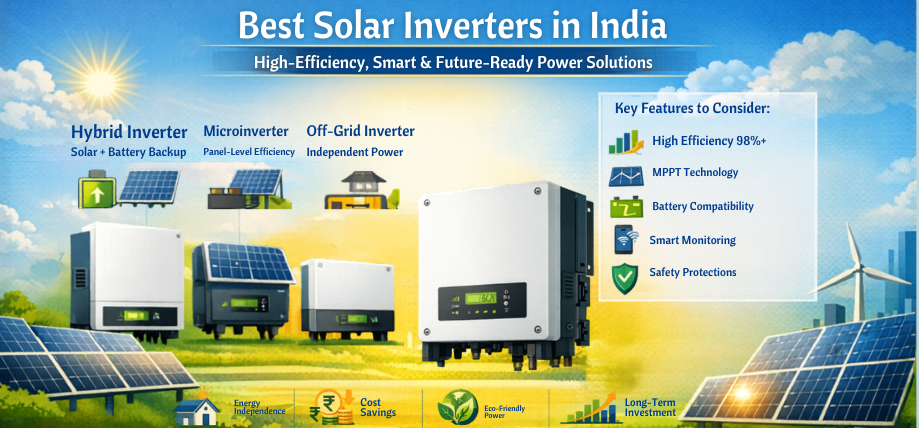
The transition to solar energy is no longer a trend—it is a strategic shift toward energy independence, sustainability, and long-term cost savings. At the core of every solar power system lies a critical component: the solar inverter. This intelligent device converts solar energy into usable electricity, manages system performance, and ensures seamless integration with the grid and batteries.
Selecting the best solar inverter in India requires a detailed understanding of technology types, efficiency ratings, compatibility, and smart features. This comprehensive guide delivers deep insights, expert comparisons, and practical recommendations to help us choose the most reliable, efficient, and future-ready solar inverter systems.
What is a Solar Inverter and How It Works
A solar inverter converts direct current (DC) generated by solar panels into alternating current (AC) used by household appliances. Modern inverters go beyond simple conversion by offering:
- Maximum Power Point Tracking (MPPT) for optimal energy harvest
- Real-time performance monitoring
- Grid synchronization and battery management
- Advanced safety and protection mechanisms
Types of Solar Inverters: Choosing the Right Technology
1. String Inverters – Cost-Effective and Widely Used
String inverters connect multiple solar panels in a series.
Key advantages:
- Affordable installation
- Easy maintenance
- Suitable for residential setups
2. Microinverters – Maximum Efficiency at Panel Level
Installed on each solar panel for independent operation.
Benefits:
- Higher energy efficiency
- Better performance in shading conditions
- Enhanced system reliability
3. Hybrid Solar Inverters – Power and Backup Combined
Hybrid inverters integrate solar generation with battery storage.
Highlights:
- Seamless power backup
- Energy storage capability
- Grid and battery compatibility
4. Off-Grid Solar Inverters – Independent Energy Systems
Ideal for areas with no grid connectivity.
Features:
- Complete energy independence
- Battery-based operation
- Reliable power supply
5. Grid-Tied Solar Inverters – Efficient and Cost-Saving
Connected directly to the electricity grid.
Advantages:
- No battery requirement
- Lower system cost
- Net metering benefits
Key Features to Consider in the Best Solar Inverters
Efficiency Rating
Higher efficiency ensures maximum energy conversion.
- Standard: 95%–97%
- Premium: 98%+
MPPT Technology
Ensures optimal power extraction from solar panels.
Battery Compatibility
Supports:
- Lead-acid batteries
- Lithium-ion batteries
Load Capacity
Choose based on total energy requirements.
Smart Monitoring
- Mobile apps
- Wi-Fi connectivity
- Real-time analytics
Safety Features
- Overload protection
- Short circuit protection
- Anti-islanding protection
Best Solar Inverters in India (Detailed Analysis)
1. High-Efficiency Hybrid Solar Inverter
Designed for maximum energy utilization and backup support, this category is ideal for modern homes.
Key strengths:
- Dual functionality (solar + battery)
- Intelligent energy management
- High conversion efficiency
2. Smart Wi-Fi Enabled Solar Inverter
Perfect for users seeking real-time monitoring and control.
Features:
- Mobile app integration
- Performance tracking
- Remote diagnostics
3. Heavy-Duty Solar Inverter for Large Installations
Suitable for high energy consumption.
Advantages:
- High load capacity
- Robust build quality
- Long-term durability
4. Compact Solar Inverter for Small Homes
Ideal for limited space setups.
Highlights:
- Space-efficient design
- Easy installation
- Cost-effective
5. Microinverter-Based Systems
Best for maximizing panel-level performance.
Benefits:
- Higher energy output
- Reduced system losses
- Improved reliability
Comparison Table: Solar Inverter Types
| Feature | String Inverter | Microinverter | Hybrid Inverter | Off-Grid Inverter | Grid-Tied Inverter |
|---|---|---|---|---|---|
| Efficiency | High | Very High | High | Moderate | High |
| Cost | Low | High | Medium | Medium | Low |
| Battery Support | No | No | Yes | Yes | No |
| Installation Complexity | Low | High | Medium | Medium | Low |
| Best Use Case | Homes | Premium setups | Backup systems | Remote areas | Urban homes |
Benefits of Using Solar Inverters
1. Energy Independence
Reduce reliance on grid electricity.
2. Cost Savings
Lower electricity bills significantly.
3. Eco-Friendly Power
Reduce carbon footprint.
4. Long-Term Investment
High return on investment over time.
How to Choose the Perfect Solar Inverter
Selecting the right inverter depends on:
- Energy consumption patterns
- Budget and installation size
- Availability of grid connection
- Need for battery backup
- Future scalability requirements
Installation Tips for Maximum Efficiency
- Install in a shaded, ventilated area
- Ensure proper wiring and earthing
- Use high-quality solar panels
- Avoid exposure to extreme heat
Maintenance Tips for Long-Term Performance
- Clean inverter vents regularly
- Monitor system performance
- Check connections periodically
- Schedule professional servicing
Common Mistakes to Avoid
- Choosing incorrect inverter capacity
- Ignoring compatibility with solar panels
- Overlooking warranty and service support
- Poor installation practices
Solar Inverter vs Normal Inverter: Key Differences
| Feature | Solar Inverter | Normal Inverter |
|---|---|---|
| Energy Source | Solar panels | Battery/grid |
| Cost Savings | High | Moderate |
| Eco-Friendly | Yes | Limited |
| Backup Capability | Yes (hybrid/off-grid) | Yes |
| Efficiency | High | Moderate |
Future Trends in Solar Inverter Technology
- AI-powered energy optimization
- Smart grid integration
- Advanced lithium battery systems
- IoT-enabled monitoring
Conclusion: Powering the Future with Solar Intelligence
A high-quality solar inverter is the foundation of an efficient solar power system. By choosing a solution that aligns with our energy needs, budget, and long-term goals, we achieve maximum efficiency, reliability, and sustainability. Investing in the right solar inverter ensures clean energy, reduced costs, and a future-ready home.
FAQs
1. Which solar inverter is best for home use?
Hybrid solar inverters are highly recommended.
2. What is MPPT?
It optimizes solar energy output.
3. How long do solar inverters last?
Typically 10–15 years.
4. Can solar inverter work without battery?
Yes, grid-tied systems do.
5. What is efficiency rating?
It indicates conversion efficiency.
6. Are solar inverters safe?
Yes, with built-in protections.
7. Can solar inverter run AC?
Yes, with sufficient capacity.
8. What is net metering?
Selling excess power to the grid.
9. How much does a solar inverter cost?
Varies based on capacity and features.
10. What is hybrid inverter?
Supports solar, grid, and battery.
11. Do solar inverters require maintenance?
Minimal maintenance is required.
12. What is grid-tied inverter?
Connected to the electricity grid.
13. Can solar inverter work at night?
Only with battery storage.
14. What is off-grid inverter?
Independent of grid power.
15. Are microinverters better?
Yes, for maximum efficiency.
16. How to increase solar efficiency?
Use MPPT-enabled systems.
17. Can inverter damage appliances?
No, if it outputs pure sine wave.
18. What is warranty period?
Usually 5–10 years.
19. Are lithium batteries better?
Yes, for advanced systems.
20. Can solar inverter power entire house?
Yes, with proper sizing.
21. What is load capacity?
Maximum supported power.
22. Is installation expensive?
Depends on system size.
23. Can solar inverter reduce bills?
Yes, significantly.
24. What is anti-islanding?
Prevents grid feedback issues.
25. Are solar systems eco-friendly?
Yes, completely.