
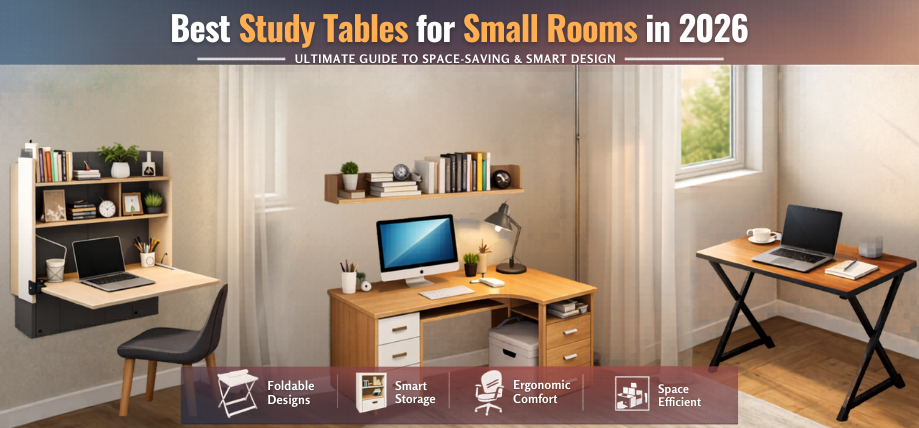
In today’s compact living environments, where space optimization is essential, selecting the best study table for small rooms has become a critical decision for students, professionals, and remote workers. A well-designed study table is not merely a piece of furniture—it is a productivity hub that enhances focus, organization, and comfort, even within limited square footage.
We present a comprehensive, high-performance, and precision-optimized guide to the best study tables for small rooms in 2026, crafted to deliver maximum efficiency, ergonomic support, and intelligent storage solutions without compromising on style or durability.
What Makes a Study Table Ideal for Small Rooms
A study table for compact spaces must integrate multi-functional design, space-saving architecture, and ergonomic efficiency. The most effective tables combine:
- Compact dimensions with maximum usability
- Vertical storage integration
- Foldable or wall-mounted features
- Clutter-free cable and accessory management
- Durable construction with minimal footprint
These characteristics ensure that even the smallest room can accommodate a high-performance study environment.
Key Features to Look for in the Best Study Tables for Small Rooms
Compact Footprint with Maximum Utility
The ideal study table occupies minimal floor space while offering sufficient room for:
- Laptop or desktop setup
- Books and study materials
- Writing and note-taking
Efficient design ensures no wasted space, making every inch functional.
Smart Storage Solutions
Modern study tables incorporate:
- Built-in shelves and drawers
- Vertical compartments
- Hidden storage sections
These features help maintain a clean, organized workspace.
Foldable and Wall-Mounted Designs
Space-saving innovation includes:
- Foldable tabletops
- Wall-mounted desks
- Convertible furniture designs
Perfect for rooms where flexibility is essential.
Ergonomic Comfort
Even in small spaces, ergonomics remain critical:
- Proper desk height alignment
- Comfortable legroom
- Smooth edges for extended use
Durable Materials and Build Quality
High-quality materials include:
- Engineered wood
- Metal frames
- Scratch-resistant finishes
Durability ensures long-term performance.
Aesthetic Integration
Compact study tables are designed to:
- Blend with room décor
- Enhance visual appeal
- Maintain a minimalist look
Types of Study Tables for Small Rooms
Wall-Mounted Study Tables
These tables:
- Attach directly to walls
- Save floor space entirely
- Offer foldable functionality
Ideal for ultra-compact rooms and minimalist setups.
Foldable Study Tables
Flexible and portable:
- Easy to store when not in use
- Lightweight design
- Suitable for multi-purpose rooms
Corner Study Tables
Optimized for unused spaces:
- Fit neatly into corners
- Maximize room layout efficiency
- Provide additional storage
Compact Writing Desks
Simple yet effective:
- Minimalist structure
- Small footprint
- Essential functionality
Multi-Functional Study Tables
Designed for versatility:
- Integrated shelves and cabinets
- Convertible into workstations
- Ideal for students and professionals
Best Study Tables for Small Rooms in 2026 (Top Picks)
Wall-Mounted Foldable Study Table
A highly efficient solution offering:
- Zero floor space usage
- Foldable design for flexibility
- Clean, modern appearance
Perfect for minimalist environments and tight spaces.
Compact Study Table with Storage Shelves
Combining functionality and storage:
- Vertical shelving units
- Organized compartments
- Space-efficient layout
Ideal for students needing organized study areas.
Corner Study Table with Drawers
Maximizes unused space:
- Corner-fit design
- Integrated drawers
- Stable and durable structure
Best for small bedrooms and apartments.
Portable Foldable Study Desk
Lightweight and flexible:
- Easy to move and store
- Compact design
- Budget-friendly
Perfect for temporary setups and multi-use spaces.
Modern Minimalist Study Table
Sleek and stylish:
- Clean lines
- Minimal footprint
- Durable construction
Ideal for modern interiors and clutter-free setups.
Space Optimization Strategies for Small Study Rooms
Vertical Space Utilization
Use:
- Wall shelves
- Hanging organizers
- Stackable storage
This approach maximizes available vertical space.
Multi-Purpose Furniture
Choose furniture that:
- Serves multiple functions
- Includes hidden storage
- Adapts to different needs
Cable Management
Maintain a clean setup with:
- Cable clips
- Under-desk trays
- Wireless accessories
Lighting Optimization
Use:
- Desk lamps
- Wall-mounted lights
- Natural light positioning
Proper lighting enhances focus and productivity.
Materials Comparison for Study Tables
| Material Type | Durability | Weight | Aesthetic Appeal | Best Use Case |
|---|---|---|---|---|
| Engineered Wood | High | Medium | Modern | Daily use |
| Solid Wood | Very High | Heavy | Premium | Long-term use |
| Metal Frame | High | Medium | Industrial | Durable setups |
| Plastic | Low | Light | Basic | Temporary use |
Benefits of Using a Study Table in Small Rooms
A well-designed study table provides:
- Improved organization and reduced clutter
- Enhanced focus and productivity
- Efficient use of limited space
- Better posture and comfort
- A dedicated work or study zone
These advantages create a high-performance study environment even in compact spaces.
Study Table vs Regular Table: Key Differences
| Feature | Study Table | Regular Table |
|---|---|---|
| Design Purpose | Study and productivity | General use |
| Storage Options | Integrated | Limited |
| Space Efficiency | High | Moderate |
| Ergonomics | Optimized | Basic |
| Functionality | Multi-purpose | Standard |
Latest Trends in Study Tables for Small Rooms (2026)
The latest innovations include:
- Smart foldable mechanisms
- Modular and customizable designs
- Integrated charging ports and USB hubs
- Minimalist and eco-friendly materials
These trends are shaping study tables into intelligent, adaptable workspace solutions.
How to Choose the Best Study Table for Small Rooms
When selecting a study table, consider:
- Room dimensions and layout
- Storage requirements
- Usage purpose (study, work, gaming)
- Material and durability
- Design and aesthetics
A carefully chosen table ensures maximum efficiency and long-term usability.
Conclusion
The best study tables for small rooms combine compact design, smart storage, and ergonomic comfort to create a highly efficient workspace within limited space. By prioritizing functionality, durability, and intelligent design, it is possible to transform even the smallest room into a productive and organized study environment.
A well-selected study table is not just furniture—it is a strategic upgrade that enhances both performance and lifestyle.
FAQs
1. What is the best study table for small rooms?
Wall-mounted or foldable tables are ideal.
2. Are foldable study tables durable?
Yes, if made from quality materials.
3. What size is ideal for small rooms?
Width of 80–120 cm is optimal.
4. Can I use a regular table for studying?
Yes, but it lacks storage and ergonomics.
5. Are corner desks useful?
Yes, they maximize unused space.
6. What material is best?
Engineered wood offers durability and value.
7. Do study tables improve productivity?
Yes, significantly.
8. Are wall-mounted desks safe?
Yes, when installed properly.
9. What height should a desk be?
Around 70–75 cm.
10. Can study tables hold computers?
Yes, most are designed for it.
11. Are compact desks comfortable?
Yes, with proper ergonomics.
12. How to organize a small desk?
Use shelves and organizers.
13. Do I need storage in a desk?
Highly recommended.
14. Are portable desks good?
Yes, for flexibility.
15. Can I customize my desk?
Yes, with accessories.
16. What color is best?
Light colors make rooms look bigger.
17. Are metal desks durable?
Yes, very strong.
18. How to maintain a study table?
Clean regularly and avoid scratches.
19. Can desks fit in corners?
Yes, corner desks are designed for that.
20. Are minimal desks better?
Yes, for small spaces.
21. Do study tables need lighting?
Yes, for better focus.
22. Can I add shelves later?
Yes, modular options allow expansion.
23. Are multi-functional desks worth it?
Yes, they save space.
24. How long do study tables last?
5–10 years.
25. Are study tables necessary?
Yes, for organized and productive work.