
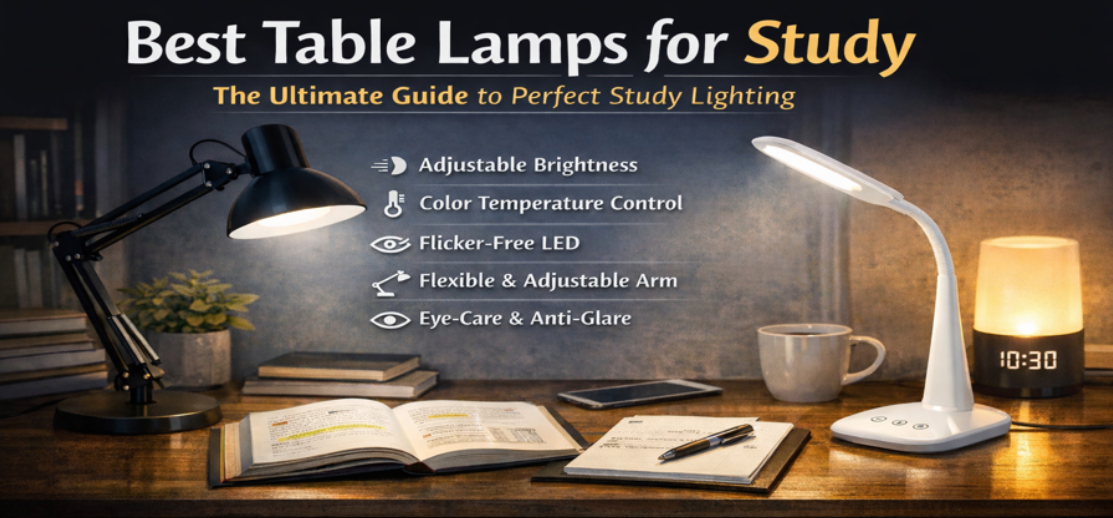
Effective study lighting is one of the most overlooked yet essential components of a productive learning environment. The best table lamps for study do far more than illuminate a desk—they reduce eye strain, enhance focus, improve posture, and create an atmosphere that supports long hours of reading, writing, and concentration. Selecting the right study lamp requires understanding lighting technology, brightness levels, ergonomics, and design features that directly influence productivity.
In this comprehensive guide, we explore the best types of study lamps, key features to consider, lighting technologies, ergonomic benefits, and expert recommendations to help create an optimal study environment.
Why the Right Study Lamp Matters for Productivity
Proper lighting directly affects visual comfort, concentration levels, and cognitive performance. Poor lighting conditions often lead to eye fatigue, headaches, and reduced productivity. A high-quality study lamp delivers consistent illumination across the work surface while minimizing glare and shadows.
Key benefits of a good study lamp include:
-
Reduced eye strain during long reading sessions
-
Improved concentration and mental clarity
-
Even illumination across textbooks and notebooks
-
Better posture due to correct light placement
-
Energy efficiency and long-lasting performance
When lighting is optimized, studying becomes significantly more comfortable and efficient.
Key Features to Look for in the Best Study Table Lamps
Choosing the best table lamp involves more than aesthetics. Several technical and ergonomic factors determine how well a lamp supports learning.
1. Adjustable Brightness Levels
A study lamp with dimmable brightness settings allows users to adapt lighting for different tasks such as reading, writing, or working on a computer.
Recommended brightness levels:
-
300–500 lumens for casual reading
-
500–800 lumens for intensive studying
-
800+ lumens for detailed tasks such as drawing or technical work
Adjustable brightness ensures that lighting remains comfortable in both daytime and nighttime environments.
2. Color Temperature Control
Color temperature significantly affects focus and comfort. The best lamps allow users to switch between lighting modes.
Typical color temperatures include:
| Color Temperature | Lighting Tone | Best Use |
|---|---|---|
| 2700K | Warm White | Relaxed reading |
| 4000K | Neutral White | Balanced studying |
| 5000K–6500K | Cool Daylight | High concentration tasks |
Cool daylight tones are widely considered ideal for studying and academic work because they enhance alertness and visual clarity.
3. Adjustable Arm and Flexible Neck
A fully adjustable lamp arm ensures the light reaches exactly where it is needed. Flexible neck lamps help eliminate shadows when writing or reading large books.
Key ergonomic advantages include:
-
Precision light placement
-
Reduced glare on glossy pages
-
Comfortable posture without leaning forward
4. Flicker-Free LED Lighting
Modern study lamps primarily use LED technology, which offers several advantages over traditional bulbs.
Benefits include:
-
Lower energy consumption
-
Longer lifespan (up to 50,000 hours)
-
Minimal heat generation
-
Stable, flicker-free illumination
Flicker-free lighting is essential because micro-flickers can cause eye fatigue during extended study sessions.
5. Anti-Glare Design
A well-designed lamp diffuses light evenly across the desk surface, preventing bright hotspots.
Look for lamps with:
-
Wide illumination panels
-
Matte light diffusers
-
Angle-adjustable heads
These features ensure comfortable reading even during long study hours.
Types of Study Table Lamps
Different lamp styles serve different study environments. Understanding each type helps determine the most suitable option.
LED Desk Lamps
LED lamps dominate modern study lighting due to their efficiency and versatility.
Advantages
-
Extremely energy efficient
-
Long-lasting bulbs
-
Multiple brightness levels
-
Sleek and modern designs
LED lamps are widely regarded as the best table lamps for students, professionals, and home offices.
Architect Lamps
Architect-style lamps feature long adjustable arms and pivoting heads, making them perfect for large desks.
Key Benefits
-
Highly flexible positioning
-
Strong focused lighting
-
Ideal for technical work, drawing, or engineering studies
Their clamp-mounted design also saves valuable desk space.
Clip-On Study Lamps
Clip lamps attach directly to desks, shelves, or bed frames.
Ideal For
-
Small study spaces
-
Dorm rooms
-
Bedside studying
They are lightweight, portable, and convenient for students with limited workspace.
Smart Study Lamps
Smart lamps integrate modern technology for enhanced functionality.
Advanced Features
-
Touch controls
-
App connectivity
-
Automatic brightness adjustment
-
Voice assistant compatibility
-
Built-in timers
Smart lamps allow users to customize lighting environments for maximum productivity.
Minimalist Desk Lamps
Minimalist lamps combine aesthetic appeal with efficient lighting.
They are characterized by:
-
Slim profiles
-
Modern finishes
-
Clean lines
-
Compact designs
These lamps fit perfectly into modern study setups and aesthetic desk environments.
Recommended Brightness and Placement for Study Lamps
Even the best lamp performs poorly if positioned incorrectly.
Ideal Lamp Placement
-
Place the lamp opposite the writing hand to avoid shadows.
-
Position the light source 15–20 inches above the desk surface.
-
Angle the lamp slightly downward toward reading material.
Optimal Lighting Coverage
A good study lamp should illuminate:
-
The entire notebook or textbook
-
A portion of the surrounding desk surface
-
Without reflecting into the eyes
Correct placement enhances comfort and prevents visual fatigue.
Energy Efficiency and Longevity
Energy efficiency is a major factor when selecting a study lamp, particularly for students who study late into the night.
LED study lamps consume up to 80% less electricity compared to incandescent bulbs.
Typical lifespan comparison:
| Lamp Type | Average Lifespan |
|---|---|
| Incandescent | 1,000 hours |
| CFL | 8,000 hours |
| LED | 50,000 hours |
LED lamps therefore offer significant long-term savings and reliability.
Best Study Lamp Features for Students
Students require lamps designed specifically for long hours of reading and note-taking.
Essential features include:
-
Touch-sensitive controls
-
Multiple brightness modes
-
Eye-care lighting technology
-
Foldable or portable design
-
USB charging ports
Many modern study lamps also include phone charging docks and built-in clocks, making them multifunctional desk companions.
How Study Lamps Improve Eye Health
Eye strain is a common issue among students who study under poor lighting conditions.
A high-quality study lamp helps by:
-
Maintaining consistent brightness
-
Eliminating flickering light
-
Reducing contrast between the screen and surroundings
-
Providing uniform illumination
Experts recommend neutral or cool white lighting to maintain focus while protecting eyesight.
Design and Aesthetic Considerations
While functionality remains the priority, design also plays a role in selecting the best study lamp.
Popular finishes include:
-
Matte black
-
Brushed aluminum
-
White minimalist finishes
-
Wood-accent designs
A well-designed lamp can enhance both productivity and workspace aesthetics.
Top Features That Define the Best Table Lamps for Study
When evaluating study lamps, prioritize models that offer the following:
Essential Features
-
Adjustable brightness levels
-
Multiple color temperature modes
-
Flicker-free LED technology
-
Flexible arm design
-
Anti-glare diffusers
Advanced Features
-
Touch control panels
-
Memory lighting settings
-
USB charging ports
-
Smart connectivity
-
Auto-dimming sensors
These features ensure that the lamp adapts to different study environments and personal preferences.
Creating the Perfect Study Lighting Setup
A study lamp works best when combined with balanced room lighting.
Recommended setup:
-
Use soft ambient lighting in the room.
-
Place the study lamp for focused task lighting.
-
Avoid studying in a completely dark room with only a lamp.
This layered lighting approach ensures maximum comfort and visual clarity.
Maintenance Tips for Long-Lasting Study Lamps
To keep a study lamp performing optimally:
-
Clean the lamp shade regularly
-
Avoid covering ventilation openings
-
Use the correct voltage adapters
-
Adjust the arm gently to prevent joint damage
-
Turn off when not in use
Proper maintenance significantly extends the lifespan of LED lamps.
Quick Comparison Table of Study Lamp Types
| Lamp Type | Best For | Key Features | Ideal Users |
|---|---|---|---|
| LED Desk Lamp | Everyday studying | Bright, efficient, adjustable | Students |
| Architect Lamp | Large desks | Long adjustable arm | Designers |
| Clip Lamp | Small spaces | Compact and portable | Dorm rooms |
| Smart Lamp | Tech setups | App control, automation | Professionals |
| Minimalist Lamp | Modern desks | Stylish, slim design | Home offices |
FAQs
1. What is the best type of lamp for studying?
LED desk lamps with adjustable brightness and color temperature are the best option.
2. How bright should a study lamp be?
A study lamp should produce 500–800 lumens for comfortable reading.
3. Is warm or cool light better for studying?
Cool white light around 5000K helps improve focus and alertness.
4. Are LED lamps good for eyes?
Yes, especially when they are flicker-free and anti-glare.
5. Can a study lamp reduce eye strain?
Proper lighting significantly reduces eye fatigue during long study sessions.
6. Where should a desk lamp be placed?
Place it opposite the writing hand to prevent shadows.
7. What is the ideal color temperature for studying?
Between 4000K and 5000K.
8. Are clip lamps good for studying?
Yes, especially for small desks or dorm rooms.
9. Do study lamps consume a lot of electricity?
LED lamps consume very little power.
10. How long do LED desk lamps last?
Up to 50,000 hours.
11. What height should a desk lamp be?
Around 15–20 inches above the desk surface.
12. Should I use a lamp while studying on a computer?
Yes, to reduce contrast between the screen and the room.
13. Are touch-control lamps better?
They offer convenient brightness adjustment.
14. Can study lamps improve concentration?
Proper lighting enhances focus and productivity.
15. Are smart desk lamps worth it?
They provide advanced customization features.
16. Is dimmable lighting necessary for studying?
Yes, different tasks require different brightness levels.
17. What lamp design is best for small desks?
Clip-on or minimalist lamps.
18. Can lighting affect learning performance?
Yes, lighting quality directly influences cognitive comfort.
19. What lamp features help prevent glare?
Diffusers and adjustable heads.
20. Is natural daylight best for studying?
Yes, but a daylight-balanced lamp can replicate it.
21. What is the best lamp for late-night studying?
An LED lamp with adjustable brightness.
22. Do study lamps generate heat?
LED lamps generate very little heat.
23. How many lighting modes should a study lamp have?
At least 3–5 brightness settings.
24. Are foldable lamps good for students?
Yes, they are portable and space-saving.
25. What makes a study lamp high quality?
Durability, adjustable lighting, energy efficiency, and ergonomic design.