
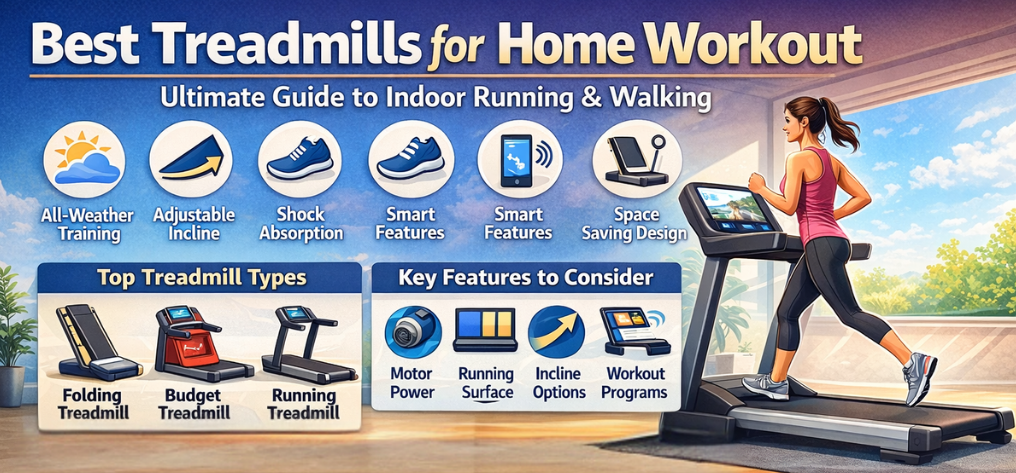
Creating an effective home fitness environment begins with choosing the right cardio equipment. Among all exercise machines, treadmills remain the most versatile and reliable option for home workouts. They allow us to walk, jog, run, perform interval training, and maintain cardiovascular health without leaving the comfort of home.
In this comprehensive guide, we explore the best treadmills for home workouts, essential features, performance comparisons, setup considerations, and strategies for choosing the ideal machine for long-term fitness success.
Why Treadmills Are the Best Investment for Home Workouts
Treadmills have become the centerpiece of modern home gyms because they support nearly every level of fitness. Whether we are beginners aiming to increase daily movement or experienced runners training for endurance, a treadmill provides controlled, customizable workouts year-round.
Key advantages include:
-
Consistent indoor training regardless of weather
-
Precise speed and incline control
-
Low-impact walking and running options
-
Structured training programs
-
Calorie-burning cardio sessions
With modern innovation, the best home treadmills also feature advanced shock absorption, smart connectivity, and compact foldable designs that fit perfectly into residential spaces.
Key Features to Look for in the Best Home Treadmills
Selecting a treadmill requires careful evaluation of performance features that influence comfort, durability, and long-term usability.
Motor Power and Performance
The motor determines the strength and reliability of the treadmill.
Typical recommendations:
-
2.0 CHP – Suitable for walking workouts
-
2.5–3.0 CHP – Ideal for jogging and light running
-
3.5 CHP or higher – Best for intense running and long sessions
A powerful motor ensures smooth belt movement, quieter operation, and longer lifespan.
Running Surface Size
Comfort during workouts depends heavily on belt length and width.
Recommended sizes:
| Workout Type | Ideal Running Surface |
|---|---|
| Walking | 50" length × 18" width |
| Jogging | 55" length × 20" width |
| Running | 60" length × 22" width |
A larger deck provides better stride support and improved safety during fast running sessions.
Incline and Decline Options
Incline capability transforms a treadmill into a full-body training machine.
Benefits include:
-
Increased calorie burn
-
Enhanced glute and hamstring activation
-
Simulated hill training
-
Reduced monotony in workouts
Premium treadmills provide up to 15% incline, dramatically increasing workout intensity.
Shock Absorption Technology
Running on hard surfaces can stress joints. The best treadmills include multi-layer cushioning systems that absorb impact.
Advantages include:
-
Reduced joint stress
-
Comfortable stride mechanics
-
Longer training sessions without fatigue
This feature makes treadmills ideal for daily cardio training.
Smart Connectivity and Training Programs
Modern treadmills integrate with fitness apps and digital coaching platforms.
Advanced features include:
-
Interactive training classes
-
Real-time performance tracking
-
Bluetooth connectivity
-
Built-in workout programs
These capabilities transform a treadmill into a complete digital fitness platform.
Top Categories of the Best Treadmills for Home Workouts
Different households require different treadmill styles depending on space, budget, and training goals.
Best Folding Treadmills for Small Spaces
Folding treadmills provide powerful workouts while saving valuable floor space.
Key Characteristics
-
Hydraulic folding systems
-
Compact vertical storage
-
Lightweight frames
-
Quick setup
Ideal for:
-
Apartments
-
Small home gyms
-
Multi-purpose rooms
These models offer excellent cardio training without permanently occupying space.
Best High-Performance Running Treadmills
Serious runners benefit from high-performance treadmills designed for endurance training.
Key features:
-
Large running decks
-
Powerful motors
-
Advanced cushioning systems
-
High top speeds (12–15 mph)
These machines replicate professional gym-quality running experiences.
Best Budget Treadmills for Home Fitness
Affordable treadmills can still provide effective daily workouts when selected carefully.
Budget-friendly models often include:
-
Compact motors
-
Basic speed controls
-
Lightweight folding frames
-
Simple digital displays
They are perfect for:
-
Walking workouts
-
Light jogging
-
Beginner fitness programs
Best Smart Treadmills with Interactive Workouts
Technology-driven treadmills offer immersive training experiences.
Advanced features include:
-
Touchscreen displays
-
Streaming fitness classes
-
Virtual running routes
-
AI-guided coaching
These treadmills provide motivation and structured training programs for long-term progress.
Best Commercial-Grade Treadmills for Home Gyms
For those building a serious home fitness studio, commercial-grade treadmills deliver unmatched durability.
Key advantages:
-
Reinforced steel frames
-
Powerful motors
-
Large running surfaces
-
Premium cushioning systems
These machines are designed for intensive daily use and long training sessions.
Comparison Table: Best Treadmill Types for Home Workouts
| Treadmill Type | Ideal User | Key Advantage | Space Requirement |
|---|---|---|---|
| Folding treadmill | Apartment users | Space saving | Small |
| Budget treadmill | Beginners | Affordable | Small |
| Running treadmill | Athletes | High speed & power | Medium |
| Smart treadmill | Tech enthusiasts | Interactive training | Medium |
| Commercial treadmill | Serious runners | Maximum durability | Large |
How to Choose the Best Treadmill for Home Use
Selecting the right treadmill depends on personal fitness goals, available space, and workout preferences.
Step 1: Determine Fitness Goals
Identify the primary purpose:
-
Walking
-
Weight loss
-
Endurance running
-
Interval training
This helps determine the motor strength and deck size required.
Step 2: Measure Available Space
Treadmills require adequate clearance for safe use.
Typical dimensions:
-
Length: 65–80 inches
-
Width: 30–36 inches
Folding treadmills significantly reduce storage space.
Step 3: Consider Weight Capacity
A durable treadmill should support at least 50 pounds more than the user's body weight for optimal performance and longevity.
Step 4: Evaluate Warranty and Durability
Reliable treadmills include strong warranties:
-
Motor warranty: 10 years
-
Frame warranty: Lifetime
-
Parts warranty: 2–5 years
This ensures long-term reliability and performance.
Effective Treadmill Workouts for Home Fitness
A treadmill supports a wide range of structured cardio workouts.
Beginner Walking Workout
Duration: 30 minutes
-
5 minutes warm-up
-
20 minutes brisk walking
-
5 minutes cool-down
Benefits:
-
Improves cardiovascular health
-
Supports weight management
-
Suitable for beginners
Fat-Burning Incline Workout
Duration: 35 minutes
Structure:
-
5-minute warm-up
-
5-minute incline walk
-
5-minute moderate jog
-
Repeat intervals
Incline walking increases calorie burn and muscle engagement.
HIIT Treadmill Workout
High-intensity interval training boosts metabolism.
Example session:
-
30 seconds sprint
-
90 seconds walking recovery
-
Repeat 10 rounds
This workout maximizes fat loss and endurance development.
Endurance Running Session
Designed for experienced runners.
Structure:
-
10-minute warm-up
-
30-minute steady run
-
10-minute cool-down
Endurance training strengthens cardiovascular capacity and stamina.
Benefits of Running on a Home Treadmill
Treadmills provide unique advantages compared with outdoor running.
Consistent Pace Control
Speed adjustments allow precise training intensity management.
Reduced Impact
Cushioning technology reduces stress on:
-
Knees
-
Ankles
-
Hips
Year-Round Training
Weather conditions never interrupt workouts.
Advanced Workout Tracking
Most treadmills monitor:
-
Distance
-
Calories burned
-
Speed
-
Heart rate
Treadmill Maintenance for Long-Term Performance
Proper maintenance ensures smooth operation and extended lifespan.
Key maintenance tasks include:
Belt Lubrication
Lubricating the belt reduces friction and motor strain.
Cleaning the Deck
Dust and debris should be removed regularly to prevent wear.
Checking Belt Alignment
Misaligned belts cause uneven movement and noise.
Inspecting Bolts and Frame
Tightening bolts ensures structural stability during intense workouts.
Safety Tips for Using a Home Treadmill
Safe operation improves workout effectiveness and prevents injuries.
Essential safety guidelines:
-
Always warm up before running
-
Use proper running shoes
-
Keep children away during operation
-
Attach the safety key
-
Start at lower speeds
Long-Term Benefits of Owning a Home Treadmill
A treadmill provides consistent opportunities for daily cardiovascular exercise.
Long-term benefits include:
-
Improved heart health
-
Increased endurance
-
Weight management
-
Stress reduction
-
Better sleep quality
With regular use, a treadmill becomes one of the most valuable investments in personal health and fitness.
FAQs
1. What is the best treadmill for home workouts?
The best treadmill offers a powerful motor, strong cushioning, and adequate running space.
2. Are folding treadmills reliable?
Yes. Many folding treadmills provide excellent durability and performance.
3. How much space does a treadmill require?
Most treadmills require 6–7 feet of floor space.
4. Can beginners use treadmills?
Yes. Treadmills are ideal for beginner walking programs.
5. Are treadmills good for weight loss?
Yes. Regular treadmill workouts burn significant calories.
6. What motor power is best for home treadmills?
A 2.5–3.5 CHP motor works well for most users.
7. Is incline training effective?
Yes. Incline walking increases intensity and calorie burn.
8. Do treadmills damage joints?
Modern treadmills use cushioning systems that reduce impact.
9. How often should I use a treadmill?
Most people benefit from 3–5 sessions per week.
10. Can treadmills replace outdoor running?
Yes. Many runners train exclusively indoors.
11. Are smart treadmills worth it?
Smart treadmills provide interactive training and motivation.
12. How long do treadmills last?
Quality treadmills last 7–12 years with proper maintenance.
13. What speed do treadmills reach?
Most reach speeds of 10–12 mph.
14. Are treadmills noisy?
Modern motors operate quietly, especially in higher-end models.
15. Can walking on a treadmill burn fat?
Yes. Brisk walking burns calories effectively.
16. Should treadmills have heart rate monitors?
Heart rate tracking helps optimize workouts.
17. What is the best incline level?
Inclines between 5–10% provide effective training.
18. How much electricity do treadmills use?
Most treadmills consume moderate electricity comparable to household appliances.
19. Are treadmills safe for seniors?
Yes, especially models with handrails and safety keys.
20. What is the best treadmill workout duration?
30–45 minutes provides excellent cardio benefits.
21. Can I run every day on a treadmill?
Yes, if workouts are balanced and recovery is included.
22. Are manual treadmills effective?
Manual treadmills provide basic cardio but less comfort.
23. What accessories improve treadmill workouts?
Fitness trackers, running shoes, and cooling fans enhance training.
24. Should treadmills be placed on mats?
Yes. Mats reduce vibration and protect floors.
25. What is the most important treadmill feature?
Motor power and cushioning determine performance quality.