
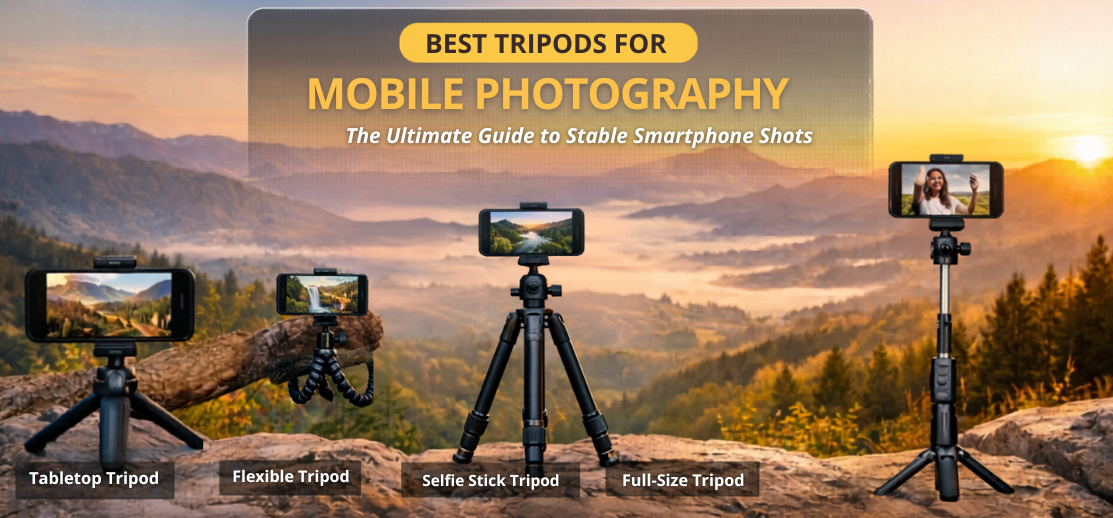
Mobile photography has transformed how creators capture images and videos. Modern smartphones now feature advanced camera systems capable of producing stunning photos and cinematic video. However, achieving professional-quality smartphone photography requires more than just a powerful camera. Stability plays a decisive role in sharpness, composition, exposure control, and creative framing.
A high-quality tripod for mobile photography eliminates camera shake, enables long-exposure photography, supports precise framing, and opens the door to advanced techniques such as time-lapse, astrophotography, and professional video recording.
This comprehensive guide explores the best tripods for mobile photography, the essential features to evaluate, different tripod types, and the ideal options for photographers, vloggers, and content creators who want to elevate their mobile photography workflow.
Why a Tripod is Essential for Mobile Photography
Smartphone cameras include optical stabilization and software processing, but they cannot fully eliminate motion blur or hand shake. A tripod delivers absolute camera stability, ensuring sharper images and more controlled shooting environments.
Key Advantages of Using a Mobile Tripod
-
Perfectly stable images
-
Improved low-light photography
-
Professional framing control
-
Hands-free shooting
-
Better video stabilization
-
Long-exposure capabilities
Tripods allow photographers to push smartphone cameras beyond casual photography into serious creative photography and filmmaking.
Key Features to Look for in the Best Tripods for Mobile Photography
Selecting the right tripod requires evaluating design, portability, and compatibility with smartphones.
1. Smartphone Compatibility
A tripod must include a universal smartphone mount capable of holding devices securely.
Important compatibility factors include:
-
Adjustable phone clamp
-
Rubber grips to prevent slipping
-
Support for phones with protective cases
-
Horizontal and vertical orientation
Quality smartphone mounts ensure secure positioning without damaging the device.
2. Tripod Stability and Build Quality
The most important factor in any tripod is stability. Weak tripods introduce vibrations that reduce image clarity.
Materials used in high-quality tripods include:
-
Aluminum alloy
-
Carbon fiber
-
Reinforced ABS plastic
Carbon fiber tripods offer the best balance between strength and portability, making them ideal for travel photographers.
3. Adjustable Height
Height flexibility enables photographers to capture diverse perspectives.
Typical mobile tripods provide:
-
Minimum height: 5–10 inches
-
Maximum height: 40–70 inches
A wide height range allows for tabletop photography, eye-level shooting, and overhead compositions.
4. 360-Degree Ball Head Rotation
A ball head mount allows smooth camera movement in every direction.
Key benefits include:
-
Quick angle adjustments
-
Smooth panning for video
-
Flexible framing
Ball heads are essential for professional framing and dynamic shooting angles.
5. Portability and Weight
Mobile photography often involves travel, outdoor adventures, or on-the-go content creation.
Ideal tripod characteristics include:
-
Lightweight construction
-
Foldable design
-
Compact travel size
Portable tripods fit easily inside camera bags or backpacks.
Types of Tripods for Mobile Photography
Understanding tripod categories helps photographers choose the right model for their shooting style.
Tabletop Tripods
Tabletop tripods are compact tripods designed for desks, tables, and flat surfaces.
Features
-
Lightweight design
-
Portable size
-
Simple setup
-
Ideal for indoor photography
Best Use Cases
-
Product photography
-
Video calls
-
YouTube recording
-
Social media content
Tabletop tripods are the most convenient option for everyday smartphone photography.
Flexible Tripods (Gorilla-Style Tripods)
Flexible tripods feature bendable legs that wrap around objects such as poles, railings, or tree branches.
Features
-
Bendable legs
-
Non-slip rubber grips
-
Compact portability
Best Use Cases
-
Outdoor photography
-
Travel photography
-
Adventure photography
-
Vlogging
Flexible tripods enable creative mounting options that traditional tripods cannot provide.
Full-Size Tripods
Full-size tripods provide maximum stability and height.
Features
-
Adjustable telescopic legs
-
Professional stability
-
Pan and tilt heads
Best Use Cases
-
Landscape photography
-
Long exposure photography
-
Night photography
-
Professional mobile videography
These tripods transform smartphones into serious photography tools capable of professional results.
Selfie Stick Tripod Hybrids
Modern mobile tripods often combine selfie sticks and tripod functionality.
Features
-
Extendable handle
-
Foldable tripod legs
-
Bluetooth shutter control
Best Use Cases
-
Travel photography
-
Group photos
-
Social media content
-
Mobile vlogging
Hybrid designs deliver maximum versatility for mobile content creators.
Best Tripods for Different Mobile Photography Needs
Different shooting scenarios require specialized tripod designs.
Best Tripods for Travel Photography
Travel photographers require lightweight and compact equipment.
Ideal travel tripod features:
-
Foldable legs
-
Lightweight aluminum or carbon fiber
-
Quick setup mechanisms
Travel tripods must balance portability with stability.
Best Tripods for Vlogging
Vloggers need flexibility and quick adjustments during recording.
Essential features include:
-
360-degree rotating mount
-
Flexible legs
-
Compact size
Vlogging tripods should allow smooth camera positioning and easy portability.
Best Tripods for Night Photography
Night photography requires long exposure times.
Tripod requirements include:
-
Maximum stability
-
Adjustable height
-
Strong locking mechanisms
Stable tripods prevent motion blur in long exposure images.
Best Tripods for Product Photography
Product photography demands precision framing and repeatable angles.
Recommended tripod features:
-
Stable base
-
Fine tilt adjustments
-
Horizontal shooting capability
Tripods improve composition accuracy for professional product shots.
Advanced Mobile Photography Techniques Enabled by Tripods
Tripods unlock creative techniques impossible with handheld photography.
Long Exposure Photography
Long exposure photography captures motion over extended shutter times.
Examples include:
-
Light trails
-
Water motion blur
-
Night traffic photography
Tripods ensure complete stability during long exposure shots.
Time-Lapse Photography
Time-lapse photography records changes over time by capturing images at intervals.
Popular time-lapse subjects:
-
Sunsets
-
City traffic
-
Cloud movement
-
Construction projects
Tripods ensure consistent framing throughout the entire time-lapse sequence.
Astrophotography with Smartphones
Modern smartphones can capture stars and night skies with long exposures.
Tripods make possible:
-
Stable night sky shots
-
Milky Way photography
-
Moon photography
Stability is crucial for sharp astrophotography results.
Professional Mobile Videography
Video requires stable camera positioning to avoid shaky footage.
Tripods enable:
-
Smooth interviews
-
Static cinematic shots
-
Professional vlogging setups
They transform smartphones into professional filmmaking tools.
How to Set Up a Mobile Tripod for Perfect Shots
Proper setup maximizes tripod performance.
Step 1: Choose a Stable Surface
Place the tripod on a flat and stable surface to avoid vibrations.
Avoid:
-
Uneven terrain
-
Soft ground
-
Slippery surfaces
Step 2: Lock the Legs Securely
Extend tripod legs fully and ensure each section is properly locked.
Loose legs reduce stability and compromise image quality.
Step 3: Mount the Smartphone Properly
Insert the smartphone into the mount and confirm that it is secure and centered.
Ensure the clamp holds the phone firmly without excessive pressure.
Step 4: Adjust the Camera Angle
Use the ball head to fine-tune the framing.
Position the smartphone for:
-
Landscape orientation
-
Portrait orientation
-
Low-angle photography
-
Overhead compositions
Common Mistakes When Using Mobile Tripods
Avoiding common mistakes ensures professional results.
Using Low-Quality Phone Mounts
Weak clamps may drop smartphones during shooting.
Always use secure and durable mounts.
Ignoring Weight Distribution
Heavy smartphones can tip unstable tripods.
Ensure balanced positioning.
Overextending Tripod Legs
Maximum extension reduces stability.
Extend legs only as needed for the shot.
Shooting in Wind Without Support
Wind causes tripod vibrations.
Solutions include:
-
Adding weight to the tripod
-
Lowering tripod height
-
Using heavier models
Bullet Points: Quick Guide to Choosing the Best Mobile Photography Tripod
-
Choose durable materials like aluminum or carbon fiber
-
Look for adjustable height and locking legs
-
Ensure secure smartphone mount compatibility
-
Prefer 360-degree ball heads
-
Select lightweight designs for travel
-
Use flexible tripods for outdoor shooting
-
Consider tripod-selfie stick hybrids for versatility
-
Check weight capacity and stability
-
Use tripods for long exposure and night photography
-
Invest in portable travel tripods for mobility
Comparison Table: Mobile Tripod Types
| Tripod Type | Portability | Stability | Height Range | Best Use |
|---|---|---|---|---|
| Tabletop Tripod | High | Medium | Low | Desk photography |
| Flexible Tripod | Very High | Medium | Low | Outdoor mounting |
| Full-Size Tripod | Medium | Very High | High | Professional photography |
| Selfie Stick Tripod | High | Medium | Medium | Travel and vlogging |
| Travel Tripod | Very High | High | Medium | Mobile photography trips |
FAQs
1. What is the best tripod for mobile photography?
A stable tripod with a universal smartphone mount and adjustable height is ideal.
2. Do smartphones really need tripods?
Yes. Tripods eliminate shake and improve photo sharpness.
3. Are flexible tripods good for smartphones?
Yes, flexible tripods allow mounting on unique surfaces.
4. Can tripods improve night photography?
Absolutely. Tripods enable long exposure shots in low light.
5. What tripod height is best for mobile photography?
Tripods between 40–70 inches offer maximum versatility.
6. Do tripods help with video recording?
Yes, they provide stable footage for professional videos.
7. Are travel tripods durable?
High-quality travel tripods are both lightweight and strong.
8. What materials are best for tripods?
Aluminum and carbon fiber offer durability and stability.
9. Can tripods hold large smartphones?
Most modern mounts support large devices.
10. Do I need a ball head mount?
Yes, ball heads allow flexible angle adjustments.
11. Are selfie stick tripods useful?
Yes, they combine portability and tripod stability.
12. Can tripods improve social media photos?
Yes, they enable better framing and lighting control.
13. Do tripods work with phone cases?
Most adjustable clamps support phones with cases.
14. What tripod is best for vlogging?
Flexible tripods and compact travel tripods are ideal.
15. Can smartphones shoot long exposure photos?
Yes, many smartphones support long exposure modes.
16. Do tripods help with group photos?
Yes, they allow hands-free group photography.
17. What tripod is best for beginners?
Compact tabletop tripods are simple and affordable.
18. Can tripods be used outdoors?
Yes, especially flexible and travel tripods.
19. How much weight can mobile tripods hold?
Most support 500g to 2kg.
20. Are carbon fiber tripods worth it?
Yes, they are lightweight and extremely durable.
21. Do tripods help with time-lapse photography?
Yes, they maintain stable framing.
22. What tripod is best for Instagram content?
Portable flexible tripods work well for social media.
23. Can tripods improve video calls?
Yes, they provide stable camera positioning.
24. How long do tripods last?
Quality tripods can last many years.
25. Are tripods necessary for professional smartphone photography?
Yes, they are essential for achieving professional results.