
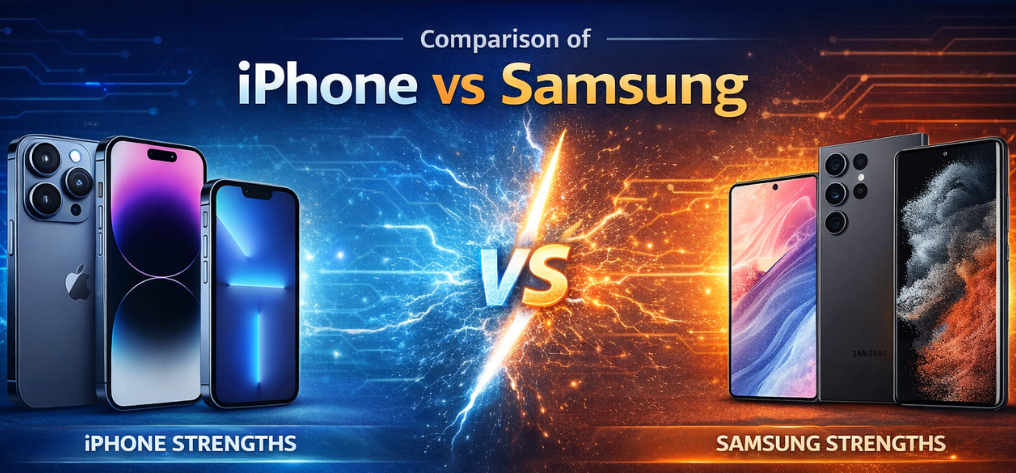
Product Comparison: iPhone vs Samsung
The global smartphone landscape is dominated by two technology giants delivering innovation, premium design, powerful ecosystems, and cutting-edge performance. Choosing between the iPhone vs Samsung is not simply selecting a device — it is deciding between two philosophies of mobile computing, user experience, software ecosystems, and long-term value.
This comprehensive comparison explores design, performance, cameras, software, battery life, ecosystem integration, pricing strategies, durability, gaming performance, AI capabilities, productivity features, and future innovation, providing a complete evaluation for informed decision-making. roobai.com
The Brands Behind the Battle
The smartphone rivalry centers on two industry leaders: Apple and Samsung. Both companies invest billions in research, semiconductor development, camera innovation, and ecosystem expansion.
While one focuses on tight hardware-software integration, the other emphasizes hardware diversity, customization, and technological experimentation.
Design Philosophy and Build Quality
iPhone Design Approach
The iPhone emphasizes minimalism, premium materials, and consistency. Devices feature:
-
Aerospace-grade aluminum or titanium frames
-
Flat symmetrical edges
-
Precision glass finishing
-
Controlled color palette
-
Industry-leading build refinement
The result is a device that prioritizes durability, tactile quality, and timeless aesthetics.
Samsung Design Approach
Samsung focuses on variety, bold innovation, and futuristic form factors.
Key characteristics:
-
Curved displays
-
Foldable designs
-
Ultra-thin bezels
-
Larger screen-to-body ratios
-
Diverse materials across price segments
Samsung’s portfolio ranges from budget devices to experimental foldables, offering broader design choice.
Display Technology Comparison
iPhone Displays
iPhones deliver color accuracy, brightness consistency, and smooth adaptive refresh rates. Apple emphasizes calibration and visual realism.
Strengths include:
-
Natural color reproduction
-
Strong HDR performance
-
Excellent brightness outdoors
-
Consistent viewing angles
Samsung Displays
Samsung leads display manufacturing globally and prioritizes visual impact and innovation.
Advantages:
-
Higher peak brightness
-
AMOLED leadership
-
Foldable screens
-
Ultra-high refresh rates
-
Vivid color tuning
Samsung often pushes display technology forward faster.
Performance and Chipset Power
iPhone Performance
Apple designs its own silicon, resulting in industry-leading single-core performance, efficiency, and long software optimization cycles.
Benefits:
-
Faster app launches
-
Consistent performance over years
-
Strong gaming efficiency
-
Better thermal control
-
Longer lifespan
Samsung Performance
Samsung uses multiple chipsets depending on region and model while delivering powerful multitasking and hardware flexibility.
Strengths:
-
High RAM capacity
-
Strong multitasking
-
Advanced cooling systems
-
Gaming optimization modes
-
Performance tuning options
Performance differences are often noticeable in sustained workloads.
Camera System Comparison
iPhone Camera Experience
iPhones focus on consistent image processing, natural tones, and video leadership.
Highlights:
-
Best-in-class video stabilization
-
Reliable portrait mode
-
Strong low-light consistency
-
Accurate skin tones
-
Seamless lens switching
Content creators often value iPhone video performance.
Samsung Camera Experience
Samsung emphasizes hardware versatility and zoom capabilities.
Advantages:
-
High megapixel sensors
-
Periscope zoom
-
AI scene optimization
-
Advanced night photography
-
Pro manual controls
Samsung provides more creative flexibility.
Software Experience and User Interface
iPhone Software Philosophy
The iPhone delivers controlled simplicity, fluid animations, and long update support.
Key strengths:
-
Clean interface
-
Predictable updates
-
Strong privacy features
-
Tight ecosystem integration
-
Stable app performance
Samsung Software Philosophy
Samsung offers customization, multitasking power, and feature depth.
Advantages:
-
Split-screen multitasking
-
Theme customization
-
Advanced widgets
-
File management flexibility
-
Stylus integration on select models
Power users often prefer this flexibility.
Ecosystem Integration
iPhone Ecosystem
The iPhone ecosystem is built around seamless interaction between devices.
Features include:
-
Instant file sharing
-
Cross-device messaging
-
Unified backups
-
Continuity workflows
-
Wearable integration
The ecosystem encourages brand loyalty.
Samsung Ecosystem
Samsung builds a broader ecosystem across phones, TVs, appliances, tablets, and wearables.
Strengths:
-
Multi-device control
-
Smart home integration
-
PC connectivity
-
Cross-platform compatibility
-
Expandable accessory ecosystem
Samsung emphasizes versatility.
Battery Life and Charging
iPhone Battery Strategy
iPhones prioritize efficiency over capacity.
Benefits:
-
Optimized background activity
-
Strong standby performance
-
Consistent daily usage
-
Reliable battery health management
Samsung Battery Strategy
Samsung focuses on larger batteries and faster charging technologies.
Advantages:
-
Higher capacity
-
Faster wired charging
-
Reverse wireless charging
-
Power saving customization
Heavy users may prefer Samsung battery flexibility.
Gaming Performance Comparison
Gaming highlights different strengths.
iPhone gaming advantages
-
Chip efficiency
-
Consistent frame rates
-
Strong developer optimization
-
Thermal stability
Samsung gaming advantages
-
Larger displays
-
Higher refresh rates
-
Game optimization dashboards
-
More RAM for multitasking
Both platforms deliver premium gaming experiences.
AI and Smart Features
AI has become central to smartphones.
iPhone AI focus
-
On-device processing
-
Privacy-centric AI
-
Photo enhancement
-
Voice assistance integration
Samsung AI focus
-
Camera AI features
-
Real-time translation
-
Productivity automation
-
Advanced customization
Samsung often introduces experimental AI features earlier.
Productivity and Work Use
iPhone Productivity
-
Reliable business apps
-
Secure communication
-
Strong video conferencing
-
Consistent performance
Samsung Productivity
-
Desktop mode features
-
Stylus support
-
Multitasking windows
-
External display workflows
Samsung offers more desktop-like flexibility.
Durability and Longevity
Both brands emphasize durability.
iPhone strengths
-
Long software updates
-
Strong resale value
-
Consistent performance aging
Samsung strengths
-
Hardware variety
-
Foldable innovation
-
Competitive durability improvements
Longevity depends on usage patterns.
Pricing Strategy and Value
iPhone Pricing
-
Premium positioning
-
Stable resale value
-
Fewer discounts
-
Longer lifespan value
Samsung Pricing
-
Wide price range
-
Frequent discounts
-
Flagship innovation
-
Budget to premium options
Samsung offers broader affordability.
Who Should Choose iPhone
-
Users seeking simplicity and reliability
-
Content creators focused on video
-
Buyers invested in ecosystem devices
-
Long-term update seekers
Who Should Choose Samsung
-
Users wanting customization and variety
-
Multitaskers
-
Photography enthusiasts needing zoom
-
Early adopters of new hardware
Future Innovation Direction
The competition is shifting toward:
-
Foldable evolution
-
AI assistants
-
Satellite connectivity
-
AR integration
-
Advanced silicon
-
Cross-device computing
Both brands are shaping the future of mobile computing.
Final Comparison Overview
The iPhone vs Samsung debate represents control vs flexibility, consistency vs experimentation, ecosystem depth vs hardware diversity. The best choice depends on priorities, workflow, and long-term device strategy.
FAQs
-
Which is better overall?
Depends on preferences. -
Which lasts longer?
iPhone often has longer updates. -
Which has better cameras?
Both excel in different areas. -
Which is better for gaming?
Both are strong. -
Which has better battery?
Samsung typically larger capacity. -
Which is more customizable?
Samsung. -
Which is simpler to use?
iPhone. -
Which has better resale value?
iPhone. -
Which supports multitasking better?
Samsung. -
Which is better for video?
iPhone. -
Which offers more models?
Samsung. -
Which gets discounts more often?
Samsung. -
Which is better for business?
Both. -
Which ecosystem is stronger?
iPhone integration is tighter. -
Which innovates hardware faster?
Samsung. -
Which is better for photography zoom?
Samsung. -
Which is more secure?
Both emphasize security. -
Which is better for long use?
iPhone consistency helps. -
Which is better for customization?
Samsung. -
Which is better for creators?
Depends on workflow. -
Which charges faster?
Samsung. -
Which has better software stability?
iPhone. -
Which is better for productivity?
Samsung flexibility. -
Which is better for beginners?
iPhone simplicity. -
Which should we buy?
Based on priorities.
Comparison Table
| Category | iPhone | Samsung |
|---|---|---|
| Design | Minimalist premium | Diverse futuristic |
| Display | Accurate | Vivid innovative |
| Performance | Efficient silicon | High multitasking |
| Camera | Video leader | Zoom versatility |
| Software | Simple stable | Customizable feature-rich |
| Battery | Efficient | Larger capacity |
| Pricing | Premium | Wide range |
| Ecosystem | Tight integration | Broad device network |
For more information and to start using Roobai.com, visit our official website and download the app to stay updated on the best deals and offers. With Roobai.com, you can ensure that every shopping experience is not just an opportunity to shop but an opportunity to save big